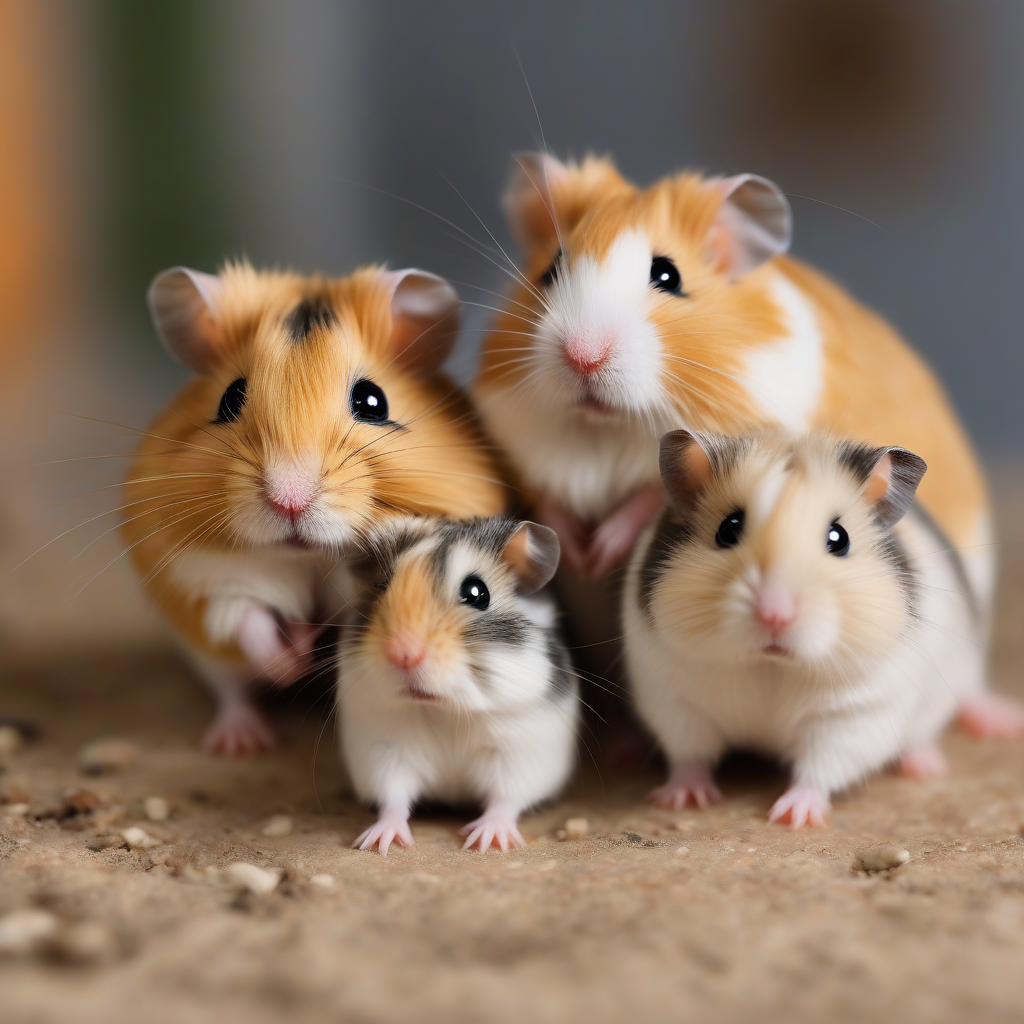
In this article, you will discover the hidden social codes of the most common hamster species (Syrian, Campbell's Dwarf, Winter White Dwarf, Roborovski, and Chinese Hamster), learning how to interact with them in the most appropriate and species-specific way. Uncover the secrets to building a deep and meaningful bond with your tiny friend by understanding each hamster's unique social needs.


Discover the neurobiological signals of hidden stress your newly adopted cat experiences during adaptation to a new social environment. This article reveals 5 insidious signs of your cat's silent struggle and scientific strategies for peaceful, long-term harmony.

Your dog's anal sacs, located beneath the tail, can be hidden alarm bells often overlooked but profoundly affecting their quality of life. In this article, you will discover the 5 insidious neurobiological effects of anal sac problems on the brain and the lifesaving care secrets you need to know for your furry friend to live a peaceful life.
In this article, you will find comprehensive information on the insidious neurotoxic effects of heavy metal poisoning in aquarium fish, its symptoms, and lifesaving emergency intervention codes. This condition, which can arise from household water sources, improper equipment, or neglect, can severely threaten your fish's quality of life and lifespan.
One of the biggest mistakes often made when adopting a hamster is assuming all hamsters have the same social needs. However, each hamster species comes with its own unique behavioral "social blueprint." Understanding this blueprint is key to both building a deep, trusting bond with your hamster and ensuring it lives a healthy and happy life. Get ready to unlock the secret social codes of the most common hamster species (Syrian, Campbell's Dwarf, Winter White Dwarf, Roborovski, and Chinese Hamster) and discover how to interact with them in the most appropriate and species-specific manner.
Syrian hamsters (Mesocricetus auratus) are inherently solitary creatures. This solitude is not merely a preference but a crucial part of their survival instincts. Even as pups, once they reach adolescence (typically 4-8 weeks old), they cannot tolerate even their siblings and typically demand their own living space. Housing two Syrian hamsters together almost invariably leads to severe, often fatal, fights. For them, the healthiest form of socialization is the gentle and patient relationship they build with their human companions. Therefore, Syrian hamsters should always be housed alone.
Syrian hamsters can be timid and reserved at first. The way to build a bond and earn their trust is through slow, consistent, and steady approaches. First, let them get accustomed to your presence by speaking softly near their cage. Then, allow them to become familiar with your scent by gently placing your hand in the cage and holding it still. Offering small, species-appropriate treats (a tiny piece of carrot, a sunflower seed) plays a critical role in establishing a positive relationship. Remember to avoid hasty and sudden movements, as this will reduce your hamster's stress and help them get used to you more easily. Our article, Your Hamster's First Introduction: The Secret Ways to Understand Your Tiny Friend and a Guide to Successful Socialization, will provide valuable tips during this delicate process.
Campbell's Dwarf (Phodopus campbelli) and Winter White Dwarf (Phodopus sungorus) hamsters can, under certain specific conditions, live with a same-sex partner or a neutered opposite-sex partner. However, this is not a guarantee and requires careful observation. The most successful scenarios usually occur between siblings raised together from a young age or parent-offspring pairs. Before adopting another dwarf hamster, it's crucial to understand your current hamster's personality and history.
When housing two dwarf hamsters together, you must be extremely vigilant for signs of tension or aggression. These signs include constant chasing, one hamster preventing the other from accessing nesting areas or food, excessive territorial behavior, fur pulling, and wounds resulting from fights. If such signs are observed, the animals must be immediately and permanently separated and placed into individual living spaces. Attempts to reintroduce them typically result in stress and increased aggression. Ensuring the living space is adequately large and enriched can also reduce potential conflicts; Your Hamster's Secret Habitat Secrets: A Scientific Journey from Escape Burrows to Mini Forests is an important resource in this regard.
Roborovski hamsters (Phodopus roborovskii) are the smallest and fastest hamster species. Their social interactions are more complex than Syrian hamsters; they can sometimes live in small groups, but the risk of aggression is always present. Direct physical interaction with them is more challenging than with Syrian or other dwarf hamsters. They are often considered 'observational' pets because their rapid movements and small size make them difficult to handle.
Bonding with Roborovskis typically begins with observing them within their cage and enriching their living environment. High-speed running wheels, complex tunnel systems, and numerous hiding spots help them expend their energy and feel secure. Indirect interaction, such as leaving fresh food for them or being calm and gentle when cleaning their cage, are ways to gain their trust. With a patient approach, some Roborovskis may become accustomed to handling, but this should not always be expected. Remember, a hamster's bite usually stems from fear or stress; our article, Why Does Your Hamster Bite? The Secret Key to Building Trust and Socialization After Adoption, can help you understand the underlying reasons for this behavior.
Chinese hamsters (Cricetulus griseus) have longer tails and a more slender build compared to other dwarf species. Socially, while not as solitary as Syrian hamsters, they are also not as prone to living in groups as some dwarf hamsters. They generally prefer to live alone, but in some cases, a calm and compatible pair, especially a spayed male-female pair or two sibling pups, can successfully coexist. However, this situation requires continuous observation.
Chinese hamsters can be shyer than other species and may initially appear less eager for human interaction. Patience and consistency are essential for building a bond with them. Gentle hand contact, a calm environment, and avoiding sudden movements will help them get used to you. If signs of aggression (hissing, attacking, chasing) appear, it's crucial to separate them immediately, as with any species.
The cornerstone of socialization for every hamster species is trust. This trust is built by not rushing, respecting the animal's boundaries, and always offering positive experiences. Understanding your hamster's body language and behavioral signals is paramount. Being able to read signs of stress, fear, or comfort will allow you to guide your interactions correctly. Remember that each species has its unique signals.
A physically and mentally active hamster will be more open to socialization and less stressed. Various play areas, tunnels, hiding spots, and foraging activities reduce their stress and enhance their overall well-being. This creates a foundation for them to approach you more positively and facilitates bonding. Our article, Unleashing Your Hamster's Hidden Genius: 5 Scientific Intelligence Games for Cognitive Training Secrets, will inspire you in this regard.
The secret to establishing a healthy and happy relationship with your hamster lies in understanding its species-specific social structure. Embracing the solitude of the Syrian, carefully managing the potential brotherhood of dwarfs, or respecting the swift spirits of Roborovskis – each approach will unleash your tiny friend's true potential and make the bond between you deeper and more meaningful. Remember, what is expected of you is not so much to "socialize" a hamster, but rather to respect its natural behaviors and provide it with a safe, enriched, and loving environment.
