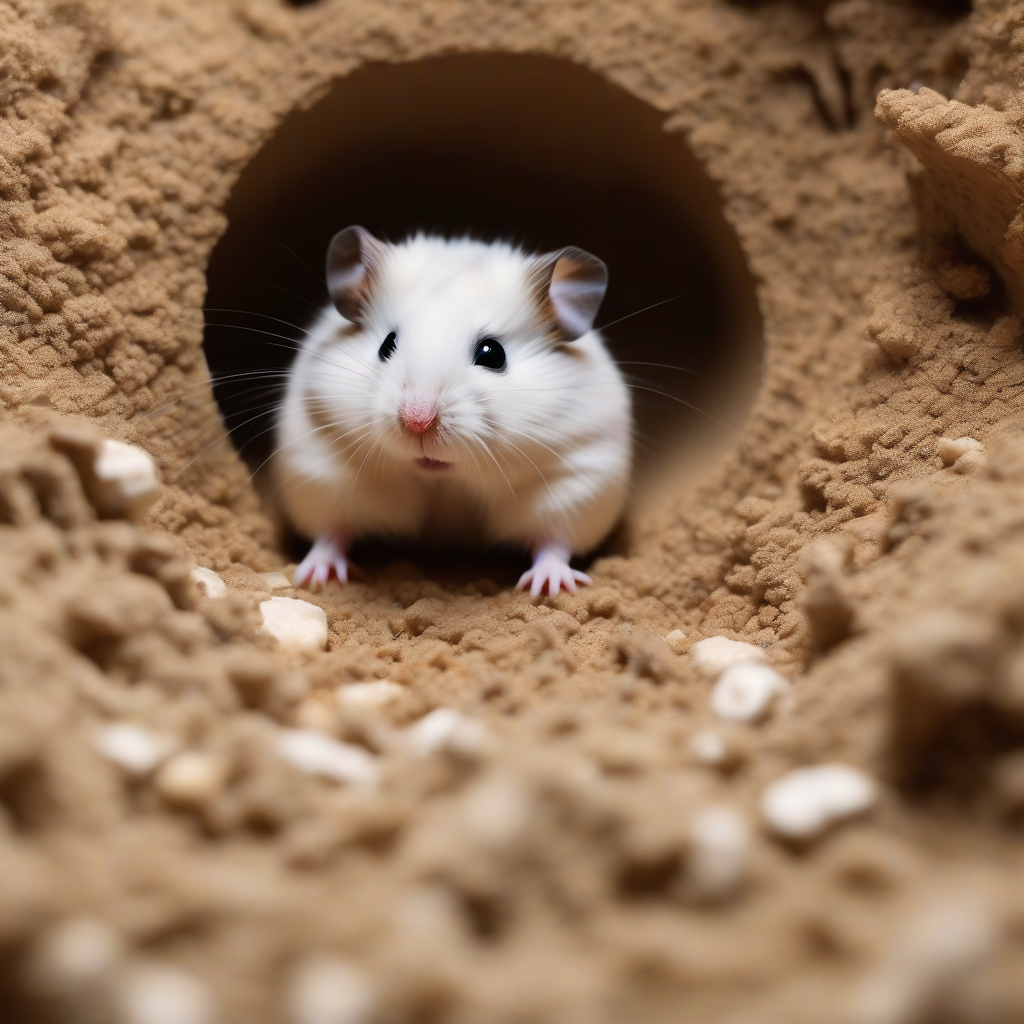
In this article, you will discover the scientific importance of deep burrowing and nesting, how to design the ideal habitat for your hamster to exhibit these behaviors, and the secrets to enhancing your tiny friend's well-being.


Discover the neurobiological signals of hidden stress your newly adopted cat experiences during adaptation to a new social environment. This article reveals 5 insidious signs of your cat's silent struggle and scientific strategies for peaceful, long-term harmony.

Your dog's anal sacs, located beneath the tail, can be hidden alarm bells often overlooked but profoundly affecting their quality of life. In this article, you will discover the 5 insidious neurobiological effects of anal sac problems on the brain and the lifesaving care secrets you need to know for your furry friend to live a peaceful life.

In this article, you will find comprehensive information on the insidious neurotoxic effects of heavy metal poisoning in aquarium fish, its symptoms, and lifesaving emergency intervention codes. This condition, which can arise from household water sources, improper equipment, or neglect, can severely threaten your fish's quality of life and lifespan.
Hamsters, despite their tiny size, are intelligent and energetic rodents with highly complex behaviors. Their wild ancestors adapted to survive by digging tunnels and building nests underground. Our pet hamsters also carry this strong instinct, and providing them with a suitable habitat is crucial for their physical and mental health. As of March 2026, the latest scientific approaches to hamster ownership and care emphasize the importance of habitat arrangements that encourage natural behaviors.
In the wild, hamsters build complex tunnel networks and multi-chambered burrows that can extend over 1 meter (3 feet) deep underground. These burrows are more than just shelters; they are centers of life. They typically include separate sleeping chambers, food storage areas (pantries), toilet chambers, and escape tunnels for safety. This structure provides protection from predators and thermal insulation against temperature fluctuations. This architecture, a product of thousands of years of evolution, helps them stay warm at night and cool during the desert heat.
For hamsters, digging and nesting are not just fun; they are fundamental needs. This behavior allows them to satisfy their natural instincts, offering numerous benefits:
To enable your hamster to exhibit these natural instincts in a home environment, you need to design their habitat carefully.
The most critical factor for a successful underground city is appropriate substrate and sufficient depth. Hard and compact substrates like pellets or corn cob are not suitable for digging. The best substrates for hamsters include:
Depth: Depending on your hamster's species, there should be at least 20-30 cm (8-12 inches) of bedding in at least half of the cage. For Syrian hamsters, this depth can exceed 30 cm. Without sufficient depth, it's impossible for them to build stable tunnels.
It is crucial for your hamster's safety that the tunnels they dig do not collapse. The bedding needs to be of the right density. Some hamsters may instinctively use nesting materials (hamster-friendly paper tissues, pieces of toilet paper rolls, not cotton-like fibrous material) to strengthen their tunnels. Also, ensure that heavy objects (ceramic bowls, stones) in the cage are placed directly on the cage bottom, not on top of the bedding, to prevent them from falling and injuring the hamster while digging.
Hamsters tend to divide their burrows into chambers with different functions. Providing additional materials can support this natural organization:
Carefully observing your hamster's behavior is key to understanding its well-being. Understanding their emotional intelligence through body language and signals will whisper to you how content they are with their secret underground city. A hamster that digs deep, forms stable tunnels, and arranges its sleeping and pantry chambers is generally a happy and stress-free animal. Providing ample digging space also supports your hamster's cognitive intelligence and problem-solving abilities.
Designing a deep and complex underground city that honors your hamster's natural instincts is much more than just setting up a cage. It's one of the most important steps you can take for your tiny friend's physical and mental health. Remember, a happy hamster is one that has a home where it can explore, hide safely, and exhibit its natural behaviors. By applying these scientific secrets to enhance your hamster's welfare, you can provide it with the natural habitat it deserves.
