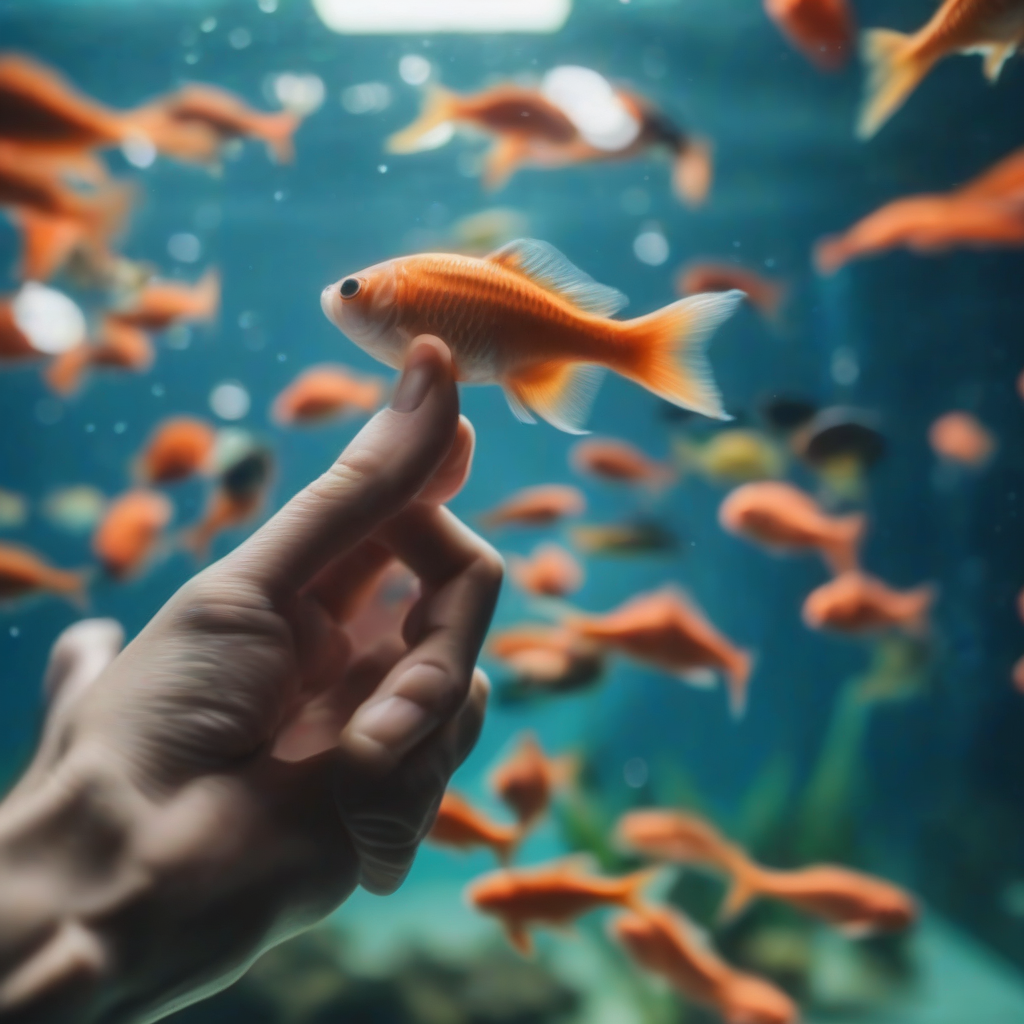
Is it a secret that fish can be trained? In this article, you will discover the scientific foundations of 'invisible' commands you can establish with your aquarium inhabitants, behavioral shaping techniques, and 5 critical training secrets that will unlock your fish's intelligence. Communicating with your fish will now be much easier and more rewarding than you ever imagined!


In this article, you will discover the 5 insidious neurobiological effects of the Encephalitozoon Cuniculi parasite, which is often overlooked in rabbits but severely affects the brain, along with lifesaving early diagnosis methods.

In this article, we will deeply explore the insidious neurobiological effects of gut microbiome imbalance (dysbiosis) on your rabbit's brain health and provide scientific-based solutions to maintain mental vitality.

In this article, you can find comprehensive information on how pancreatitis in dogs not only affects the digestive system but also insidiously impacts the brain, its neuroinflammatory mechanisms, and lifesaving emergency intervention strategies.
Most people view fish merely as aquarium decorations, believing that interaction or training with them is impossible. However, this common misconception is entirely disproven in the light of modern ethology and animal behavior science. Fish possess surprising learning capacities, memory, and an ability to adapt to their environment. Did you know you can communicate with your aquarium inhabitants through 'invisible commands' by taking observation a step further? In this article, we will delve into the complex minds of fish and the art of behavioral shaping, revealing 5 scientific training secrets that will transform life in your aquarium.
While the brain structures of fish may not be as complex as those of mammals, they contain the fundamental mechanisms necessary for learning and memory. Scientific research indicates that fish can distinguish colors, solve mazes, learn to avoid dangerous areas, and even develop an understanding of time. These cognitive abilities enable fish to respond to specific triggers (commands), showcasing their training potential. The key is to adopt a patient and consistent approach tailored to their learning styles.
Before embarking on training, ensuring your fish are in optimal health and well-being is essential. A stressed or sick fish will not be receptive to learning. Therefore, maintaining the biological balance of your aquarium and eliminating potential stressors, such as those highlighted in Your Fish's 'Invisible Chemical Stress': Insidious Toxin Sources in the Aquarium and Lifesaving Secrets of Biological Balance!, is vital.
At the core of fish training lie the principles of classical conditioning, famously demonstrated by Pavlov with dogs, and operant conditioning, developed by Skinner with rats. Classical conditioning involves associating an automatic response with a stimulus (e.g., knowing food will arrive when a light turns on), while operant conditioning involves modifying the likelihood of a behavior based on its consequences (e.g., receiving a reward for swimming through a hoop). These two powerful mechanisms are key to teaching your fish 'invisible commands'.
Training your fish requires far less equipment and much more observation and patience than you might think. Here are 5 scientific secrets that will allow you to build a deep bond with your fish and unleash their intelligence:
As with all animal training, positive reinforcement is the most effective method for fish. When they exhibit a desired behavior, immediately providing a reward (usually a small piece of food) increases the likelihood of that behavior recurring. The most critical aspect is the timing of the reinforcement. The shorter the time between the behavior and the reward, the easier the fish will make the association. This should ideally happen within 1-3 seconds.
Fish need repetition to learn new information. Holding short (5-10 minute) training sessions daily is far more effective than long, infrequent ones. Additionally, consistency in the command you use (light, finger movement, sound) and the reward prevents confusion and accelerates learning. Remember, as Your Fish's 'New Home Stress': Hidden Scientific Codes of Aquarium Adaptation and Overlooked Secrets for a Peaceful Start! illustrates, fish can experience stress when adapting to new environments; a calm and adapted fish will be much more receptive to training.
Target training is an excellent way to teach your fish to swim to a specific point or object (e.g., the tip of a stick, your finger). Move the stick in the aquarium, encouraging the fish to follow it, and reward them every time they touch or approach the stick. Over time, the fish will understand that the stick signals a reward and will learn to follow it. This technique can be used to guide your fish to a specific spot within the aquarium or to navigate simple obstacles.
Fish can learn to respond to specific sounds or light changes. For example, use a signal like turning the aquarium light on and off once just before feeding, or gently tapping the aquarium glass. By regularly associating this signal with food, you can teach your fish over time to exhibit behaviors such as expecting food or coming to a specific spot when the signal is heard or seen. This can also help establish a more organized feeding routine in your aquarium.
For more complex behaviors (e.g., swimming through a hoop, pushing a small ball), use the 'shaping' technique. This involves reinforcing every small step that leads to the desired behavior. For instance, to teach swimming through a hoop, first reward approaching the hoop, then poking its nose through, and finally swimming completely through. By gradually increasing expectations at each step, the fish will learn the target behavior step-by-step. Throughout this process, the overall health of your fish, especially nutrition-related factors like those discussed in Your Fish's 'Gut Orchestra': 5 Scientific Nutritional Secrets to Fuel Microbiome Balance and an Invisible Shield Against Diseases!, will directly influence their learning abilities.
Fish training is not just a fun hobby; it is also a crucial form of enrichment that enhances your fish's welfare. Cognitive stimulation reduces boredom, lowers stress, and allows your fish to display natural behaviors. The 'invisible commands' you establish with your fish will improve their quality of life while allowing you to form a deeper and more meaningful bond with your aquarium inhabitants. This process not only trains your fish but also helps you get to know their astonishing intelligence and complex world more intimately.
Remember, every fish is an individual and may have different learning speeds. Be patient, observe, and try to understand your fish's signals. With support from your veterinarian or aquarium specialists, you can embark on an incredible journey of learning and discovery in your aquarium. Through this, you will see that your fish are not just silent aquarium dwellers, but also trainable, interactive, and delightful companions. To maintain your fish's general health, paying attention to topics such as Your Fish's 'Invisible Shield': The Scientific Secrets of the Mucus Layer and 5 Critical Care Shields Against Diseases will positively impact the training process.
