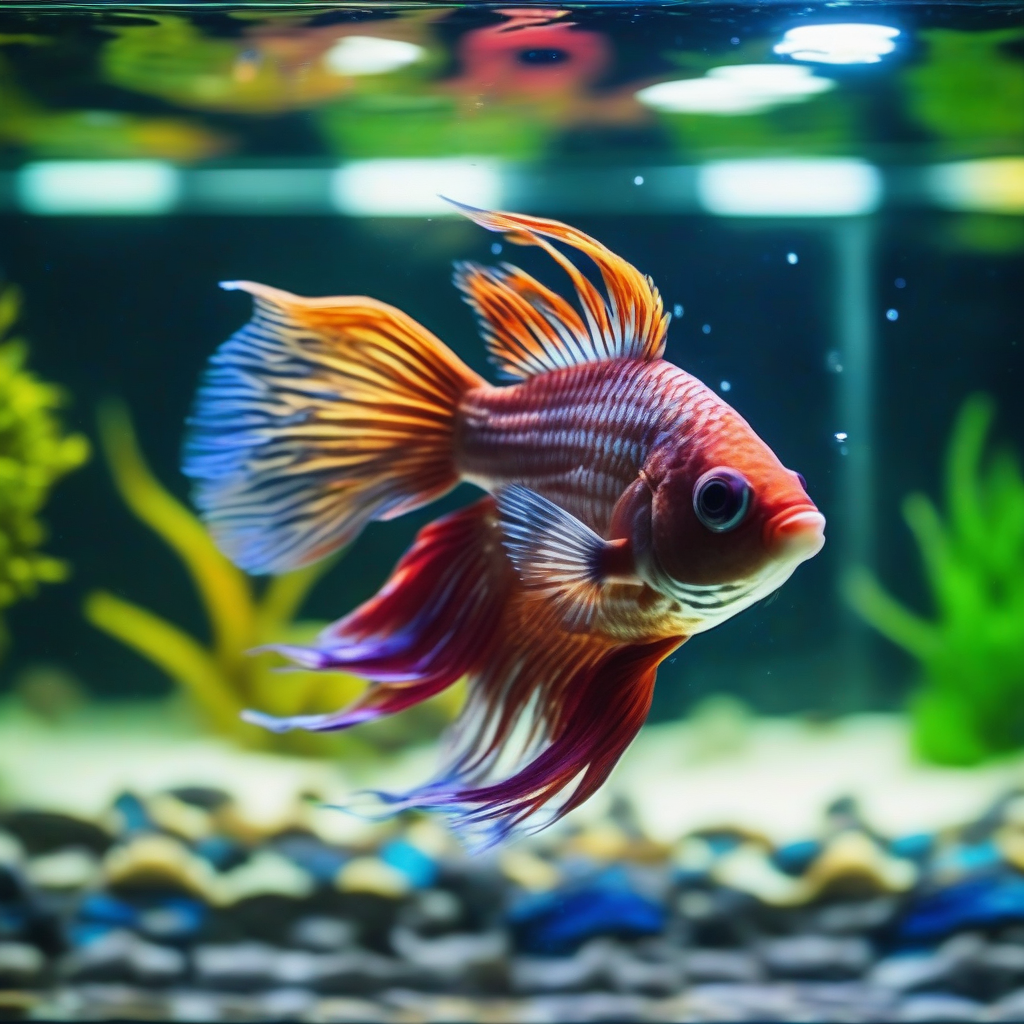
In this article, you will discover the surprising intelligence potential of your fish, learn innovative training and intelligence game strategies to turn your aquarium into an 'invisible school', and uncover scientific secrets that support behavioral development to build a deeper bond with your fish.


In this article, you will discover the 5 insidious neurobiological effects of the Encephalitozoon Cuniculi parasite, which is often overlooked in rabbits but severely affects the brain, along with lifesaving early diagnosis methods.

In this article, we will deeply explore the insidious neurobiological effects of gut microbiome imbalance (dysbiosis) on your rabbit's brain health and provide scientific-based solutions to maintain mental vitality.

In this article, you can find comprehensive information on how pancreatitis in dogs not only affects the digestive system but also insidiously impacts the brain, its neuroinflammatory mechanisms, and lifesaving emergency intervention strategies.
In the world of pets, fish are often perceived as calm, aesthetic beings, and their intelligence is frequently underestimated. However, scientific research reveals that fish possess complex learning abilities, memory, and even problem-solving skills. As of March 2026, it is now possible to take interaction with fish a step further by transforming the aquarium environment into an 'invisible school' to support their behavioral development and enhance their quality of life. In this comprehensive guide, you will discover your fish's hidden learning paths, innovative training strategies, and intelligence games that will enable you to form a deeper bond with them.
The belief that fish are merely creatures of instinctive reactions has been disproven by modern science. The inhabitants of your aquarium can acquire information from their environment, establish routines, and even respond to specific commands using fundamental learning mechanisms such as classical and operant conditioning. This implies that the aquarium effectively functions as a continuous 'invisible school'.
Classical conditioning occurs when a fish associates a neutral stimulus (e.g., a light or a hand gesture) with a natural response (eating). For instance, lightly tapping the tank before each feeding can, over time, lead your fish to associate the tap with food and react to the signal.
Operant conditioning involves the fish repeating a behavior (e.g., swimming through a tunnel) by associating it with a reward (food). This is an excellent method for teaching your fish small tricks or special skills. Consistency and patience are key.
Fish exhibit remarkable spatial memory, learning and recalling the complex layout of their aquariums. They easily learn where to hide behind which rock formation, under which plant to rest, or where the feeding spot is. This ability enhances their safety and comfort within the aquarium. Environmental enrichment can further develop this spatial memory and cognitive abilities. Periodically rearranging decorations or adding new hiding spots keeps fish mentally engaged. For more information, you can read our article: Your Fish's Aquarium Hidden Map: Spatial Memory Enhancing and Stress-Reducing Environmental Enrichment Secrets!.
Intelligence games designed for fish are more than just a source of entertainment; they are a powerful way to enhance their cognitive abilities and behavioral welfare. These games stimulate the fish's natural instincts for exploration and problem-solving.
One of the most potent motivational tools for fish is food. By using small food pellets, you can guide your fish to a specific target (e.g., swimming through a hoop or touching a colored ball). This helps develop their hand-eye coordination and focus. Providing an instant reward after each successful behavior accelerates the learning process.
Fish are quite adept at recognizing different colors, shapes, and patterns. By adding different colored beads or small toys to the aquarium, you can teach your fish to react to a specific color or shape (e.g., approaching only blue beads and touching them to receive a reward). This develops their visual intelligence and discrimination skills.
Some fish species, particularly more intelligent types like cichlids or betta fish, can solve simple mazes or pushable puzzles. You can design a small maze or a 'food puzzle' where food is placed inside, but the fish needs to push it open. Such games challenge the fish's problem-solving abilities and provide them with a mental workout.
The learning ability of a fish is directly related to the quality of its living environment. In a stressful or unhealthy aquarium, the cognitive development of fish will be negatively affected. If we consider the aquarium as a 'classroom', the conditions of this classroom must be ideal.
Optimal water quality is fundamental for fish health and, consequently, their cognitive functions. Fluctuations in ammonia, nitrite, and nitrate levels increase fish stress levels, dulling their learning abilities. Regular water testing and changes are critically important. The tips in our article The Hidden Mind of Your Fish: Decode the Subtle Signs of Acute Ammonia Poisoning in 5 Minutes! will help you in this regard.
Social dynamics within the aquarium can significantly influence the fish's learning process. Overcrowding or an aggressive social structure can lead to stress in fish, reducing their motivation to learn new things. Creating a peaceful aquarium environment is essential for the success of training. You can learn more about this in Your Aquarium's Hidden Social Map: Fish Hierarchical Order, Aggressive Behaviors, and Scientific Secrets to Creating a Peaceful Living Space.
Correct aquarium lighting regulates the biological rhythms of fish, enhances their colors, and improves their general well-being. Insufficient or excessive light can lead to stress and behavioral problems. Fish are more active and receptive to learning in an optimal light cycle. You can establish ideal lighting for your aquarium with our article The Mysterious Power of Aquarium Lighting: Scientific Secrets That Break Your Fish's Invisible Stress and Bring Out Their Colors.
The key to success in fish training is building trust and being patient. Every fish has an individual learning pace, and some may respond faster than others. You should never force them and always use positive reinforcement.
Establishing a consistent training routine helps fish understand what to expect. Training at the same time or using the same method always reinforces learning. A small reward given after every successful behavior increases the fish's motivation and makes the process enjoyable.
If you observe sudden and unexplained changes in your fish's behavior or consistently encounter difficulties in your training efforts, do not hesitate to consult a veterinarian or an experienced aquarium specialist. Sometimes underlying health issues or environmental factors can affect the fish's ability to learn.
This 'invisible school' experience you create with your fish will not only support their mental development but also strengthen the bond between you. You will both enjoy pleasant moments throughout this journey!
