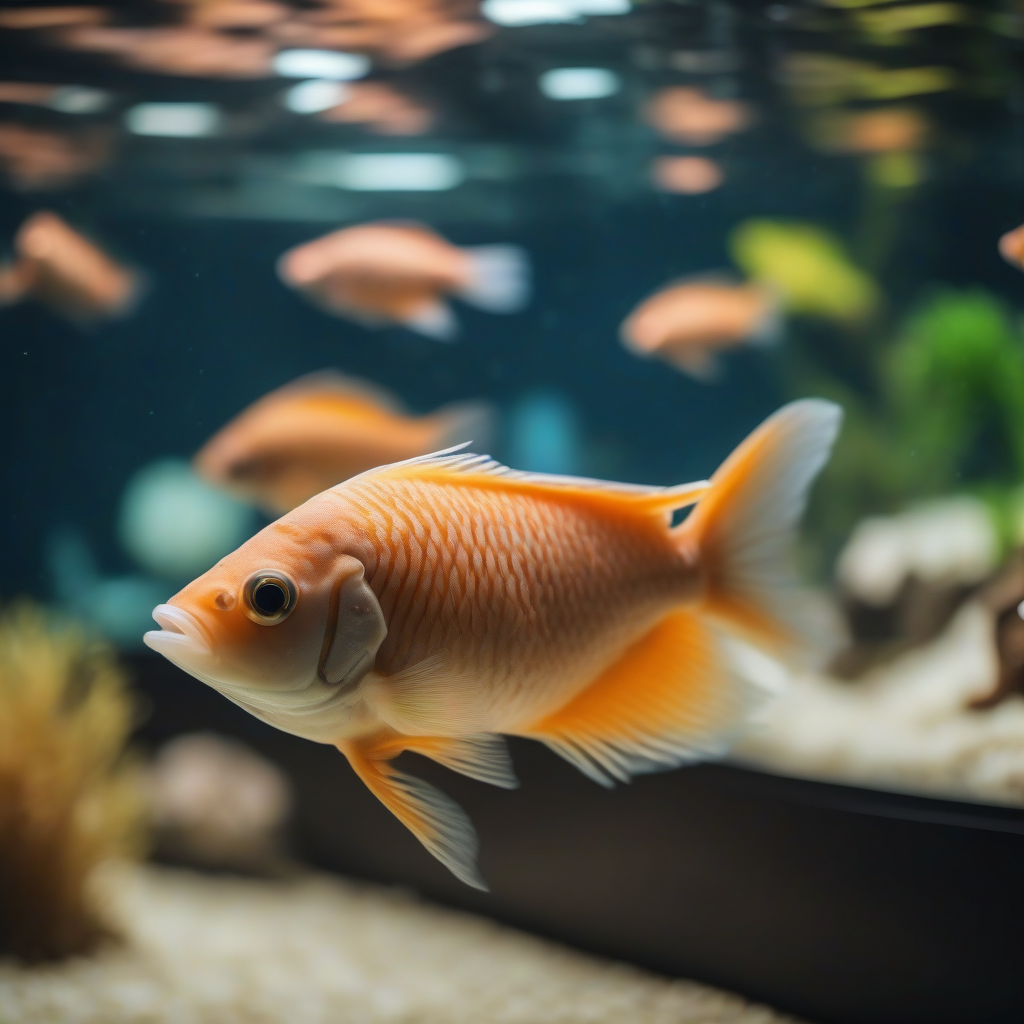
In this article, you will explore the impact of hidden sounds and vibrations in your fish aquarium on their neurobiological health and discover scientific secrets to creating a peaceful aquarium environment.


While cats possess a surprising ability to adapt to high-rise fall traumas, the insidious neurophysiological effects on their brain carry vital risks. In this article, we reveal 5 critical neurobiological effects your cat may experience after a fall and the lifesaving emergency intervention codes with scientific secrets.

In this article, you will discover how your rabbit copes with unexpected situations and its neurocognitive responses to non-routine events. Learn scientific secrets to enhance mental flexibility and manage stress.

In this article, you will find comprehensive information on the insidious neurophysiological effects of seizures in cats' brains and lifesaving emergency intervention codes during a seizure.
Fish aquariums bring a tropical breeze into our homes, creating calming and aesthetically pleasing spaces. But did you know that beneath their tranquil appearance, these underwater worlds harbor a host of often-overlooked stimuli that constantly bombard their inhabitants?
We are all familiar with the constant hum of our aquarium filters, the vibrations from water pumps, or sounds from the outside world. But how much do we know about the hidden neurobiological effects these sounds and vibrations have on the brains and nervous systems of our fish? Your fish's 'hidden vibration map' can affect their well-being much more than you might think. In this article, we will delve into the 5 key neurobiological effects of micro-acoustic signals in your aquarium and explore scientifically proven ways to create a peaceful environment for your fish by balancing these effects.
While fish may have different auditory capabilities than humans, the aquatic environment itself is a highly efficient medium for transmitting sound and vibrations. Through their lateral line organs, they can detect even the slightest changes in water movement. This means they perceive not only to escape predators or find food but also the overall 'noise' level in their aquarium environment.
Excessive or continuous vibrations and sounds can trigger the release of stress hormones like cortisol in fish. This keeps their defense mechanisms constantly active, potentially weakening their immune systems and making them more vulnerable to diseases. High sound levels also negatively impact their 'secret social chemistry,' disrupting communication within the school and leading to unrest.
Constant disturbing sounds and vibrations can alter the natural behaviors of fish. For example, fish may feel a greater need to hide, which, as discussed in our article 'Your Fish's 'Secret Security Algorithm' in the Aquarium: 5 Insidious Neurobiological Effects of Insufficient Hiding Spaces and Secrets to Peace', increases their stress levels. As mentioned in 'Fish's Hidden 'Emotional Map' in the Aquarium: Neurobiological Depths of Social Interactions and Scientific Secrets to Creating Peaceful Schools', this situation negatively affects the social harmony and overall well-being of social fish.
Fish also need rest and sleep. Continuous noise and vibrations in the aquarium can disrupt their natural sleep cycles. This can interfere with their 'hidden mind detox' processes and negatively impact their overall mental well-being. Combined with space limitations, as explored in 'Your Fish's 'Silent Prison' in the Aquarium: 5 Insidious Neurobiological Effects of Space Limitation and Secrets to Optimal Mental Well-being!', fish can feel like they are living in a 'silent prison'.
Chronic stress can adversely affect a fish's appetite and digestive system. This can lead to digestive problems, as discussed in 'The Hidden Collapse of Fish Food Granules: 5 Insidious Digestive Traps Triggered by Insufficient Fiber Content and Strategies to Boost Intestinal Health'. Furthermore, stress can affect nutrient absorption, as highlighted in 'The Secret Neurochemistry of Fish Food'.
Constant incoming sound and vibration signals can overload a fish's sensory system. This can lead to the misconception that all fish react the same way, ignoring individual character differences discussed in 'Your Fish's 'Unique Character Algorithm': 5 Hidden Neurocognitive Personality Dimensions of Each Individual in the Aquarium and Scientific Secrets for a Peaceful Environment!'. Fish may struggle to filter these complex sensory inputs. Your aquarium's 'hidden vibration map' can dictate how these signals are perceived.
Creating a quiet and calm environment is essential for your fish's well-being. Here, scientific strategies to optimize your aquarium's 'vibration map' come into play:
Place your equipment (filters, heaters, air pumps) on vibration-dampening mats. Prevent pumps and filters from directly touching the aquarium glass. Optimize your aquarium's 'flow kinetics' while minimizing vibration transfer. Combining flow optimization mentioned in 'The Fish Aquarium's 'Flow Kinetics': 5 Hidden Neurobiological Effects and Scientific Design Secrets to Zero Out Stress!' with vibration control is key.
Position your aquarium away from noisy household appliances (speakers, washing machines) and areas prone to direct impact or vibrations. Placing your aquarium on a solid and stable base reduces the transmission of external vibrations into the water. You can apply the concept of a 'hidden space' mentioned in 'Your Cat's 'Hidden Space' Crises: 5 Neurobiological Voids in the Home and Scientific Design Secrets to Zero Out Stress!' to your aquarium's location.
Decorate your aquarium with natural elements like rocks, driftwood, and plants. This provides fish with hiding places where they can feel safe. These elements can also act as a buffer, absorbing sound and vibration. By implementing the principles from 'Your Fish's Hidden 'Visual Labyrinths' in the Aquarium: 5 Neurocognitive Effects of Object Placement and the Secrets to Mental Well-being!', you can create an environment that is both visually and audibly enriching for your fish.
A healthy aquatic environment enhances a fish's ability to cope with stress. A balanced water chemistry, especially as detailed in 'Fish Aquarium's Hidden 'Electrolyte Balance' Crises: 5 Insidious Neurophysiological Signals and Lifesaving Scientific Solutions!', affects a fish's overall health and sensory sensitivity. Good maintenance ensures fish are more resilient to environmental changes.
If your aquarium generates sound, try to keep it as low as possible. Opt for low-speed pumps, quiet filters, and vibration-reducing materials. When choosing aquarium equipment, make 'noise level' a primary criterion. While not as critical as the emergency situations in 'Fish Aquarium Water Poisoning Panic Attacks: 5 Insidious Neurophysiological Signals and Lifesaving Emergency Intervention Codes!', eliminating constant low-level stressors is crucial for your fish's long-term health.
The 'resonating noise' in your aquarium is not just background sound; it can have profound effects on your fish's neurobiology. With the 5 neurobiological effects discussed and the scientific solutions offered, you can create a calmer, more peaceful, and healthier living space for your aquatic friends. Remember, silence in your aquarium is one of the greatest luxuries for your fish, and building this silence directly enhances their well-being.
