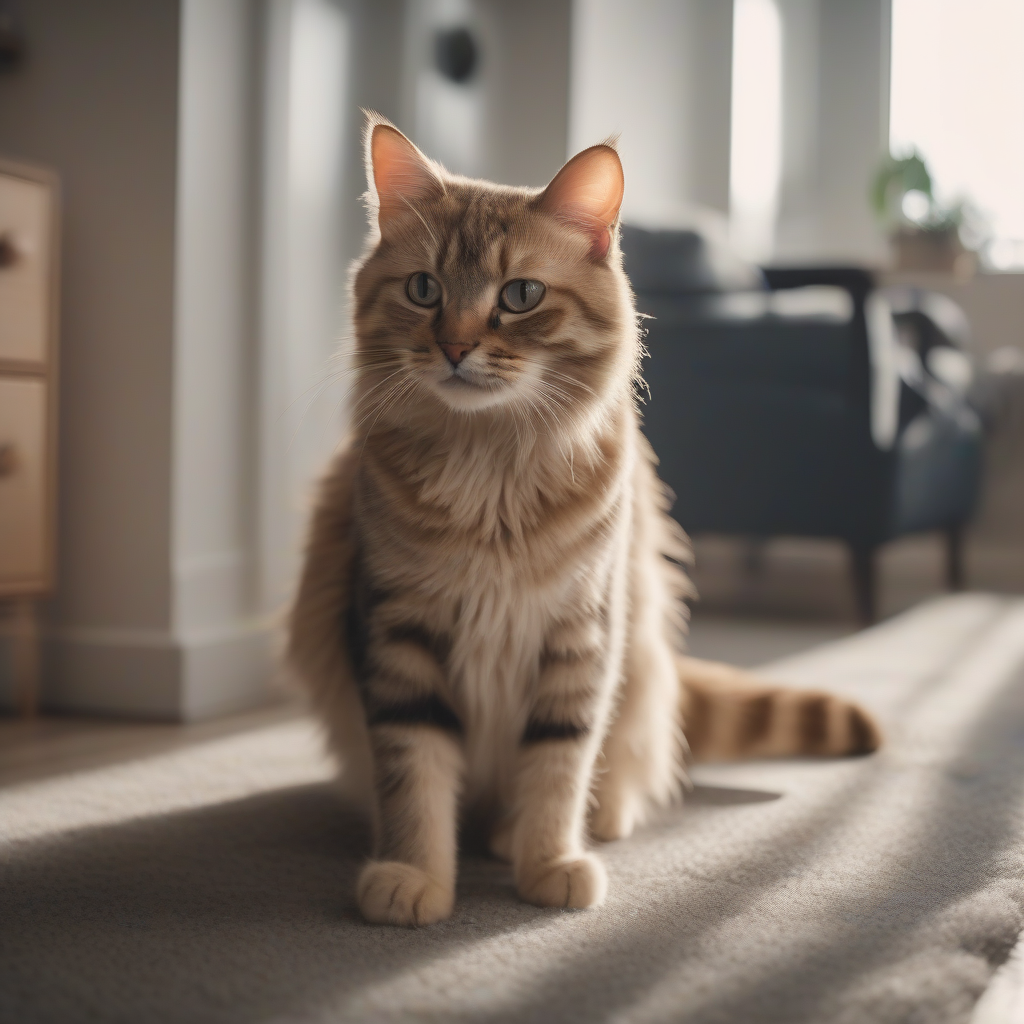
In this article, explore the neurobiological effects of your cat's vertical living spaces and the importance of choosing safe heights. Learn 5 secret scientific tips to enhance your cat's well-being.


Discover the types of burns your dog can suffer, the 5 insidious neurophysiological effects these burns create in the brain and body, and lifesaving emergency intervention strategies in this comprehensive guide. We shed light on the dangers behind forgotten household accidents from a scientific perspective.

Discover the neurobiological signals of hidden stress your newly adopted cat experiences during adaptation to a new social environment. This article reveals 5 insidious signs of your cat's silent struggle and scientific strategies for peaceful, long-term harmony.

Your dog's anal sacs, located beneath the tail, can be hidden alarm bells often overlooked but profoundly affecting their quality of life. In this article, you will discover the 5 insidious neurobiological effects of anal sac problems on the brain and the lifesaving care secrets you need to know for your furry friend to live a peaceful life.
Cats are naturally drawn to vertical spaces, considering them an integral part of their lives. For them, these aren't just high places but 'invisible balconies' offering a sense of security, a vantage point, and even an escape route. The neurobiological effects of these vertical spaces are often overlooked by pet owners. However, correctly arranged vertical living spaces can significantly impact your cat's physical and mental health.
In this article, we will explore 5 hidden neurobiological reasons behind your cat's deep need for vertical spaces. We will also provide scientific recommendations on how to design ideal vertical spaces that will make your cat feel safe and satisfy its curiosity.
Cats, both predators and prey in nature, feel secure and can detect potential threats or hunting opportunities early by observing their surroundings from a high point. This evolutionary legacy strongly continues in domestic cats. Sitting on a high platform activates the 'observation tower' mechanism in your cat's brain.
This helps reduce your cat's stress levels. Moving away from low-level noise and activity gives them a sense of control. Furthermore, observing their surroundings from these high points stimulates the visual processing and spatial awareness areas of their brain, keeping them mentally active. Providing your cat with such safe observation points in your home is critical to reducing their stress levels and ensuring mental stimulation.
For cats, height is not just a place to watch the scenery but also means safety. When they perceive a sudden threat or feel uncomfortable, they instinctively seek a high place to climb and hide. This reduces the release of cortisol (stress hormone) in their brains and promotes the secretion of more calming neurotransmitters instead.
Therefore, when designing your cat's vertical living spaces, ensure that these areas are easily accessible and sufficiently 'hidden.' For instance, the highest level of a cat tree should be designed to be easy to climb and allow for comfortable observation of the surroundings. Such areas strengthen your cat's 'social signal defense,' making them more resilient to new environments or unexpected situations. This plays a significant role in adaptation processes, as we also touched upon in topics like Your Cat's New Home Adaptation: 5 Hidden Neurological Locks of Social Intelligence and Secrets to Quick Adjustment and Your Cat's Hidden Social Defense Mechanisms: 5 Neurocognitive Hurdles in New Environment Adaptation and Scientific Success Strategies.
Climbing is one of cats' natural modes of movement, and it is vital for the healthy development of their muscles and bones. Providing vertical spaces encourages your cat to exercise regularly. This exercise not only improves physical fitness but also supports joint health and helps prevent common health problems like obesity.
Your cat's need for vertical spaces is directly linked to its quality of life. If you do not provide them with this opportunity, problems such as muscle weakening and joint stiffness may arise. Understanding the '5 unknown effects of vertical living spaces on the brain' is key to enriching your cat's life. This serves as a preventive measure against the dangers mentioned in our article titled Your Cat's 'Secret Architects' Hell': 5 Unknown Neurobiological Dangers of Vertical Living Spaces and Safe Height Secrets!.
Cats are naturally curious and enjoy exploring their surroundings. Vertical spaces satisfy this curiosity by offering them a different perspective of the house. Platforms, niches, and tunnels at different levels provide mental stimulation for your cat. This process of discovery encourages learning and prevents boredom.
Cats with insufficient mental stimulation can exhibit behavioral problems, stress, and even depression. Vertical spaces reduce these risks by offering various opportunities for your cat to play, hide, and rest. This is closely related to understanding your cat's 'Secret Mechanics' and figuring out why it sometimes ignores toys. This is because, often, what truly interests them is not just the toy itself, but the environment in which the game is set. For a deeper understanding of how cats perceive their surroundings, you can review our article Your Cat's 'Secret Mechanics': Why Does It Deliberately Ignore Toys? 5 Neurocognitive Facts.
For cats, their home is not just a shelter but also a complex 'territorial map.' Vertical spaces form an important part of this map. These areas help your cat establish its personal space and manage its social relationships with other family members (humans or other animals). Being in a high platform can give your cat a sense of superiority over others, which boosts its self-confidence.
Furthermore, vertical spaces play a critical role in your cat's 'social signal defense.' If a cat is hesitant to interact with another cat or feels uncomfortable, it can feel safe by climbing to a high place and observing the situation. This makes your cat calmer and more balanced, and it also allows it to react more quickly even in unexpected situations like sudden allergic shock. In this context, understanding topics like Your Cat's 'Hidden Body Alarm': 5 Neurophysiological Signals and Lifesaving Emergency Intervention in Acute Allergic Shock! is also related to the safety of vertical spaces.
When designing your cat's vertical spaces, the concept of 'safe height' is crucial. Each cat's physical abilities and fear threshold are different. However, generally, the following principles should be considered:
In conclusion, the vertical spaces you provide in your cat's living environment directly affect its well-being, not just as a pet but as a creature developing according to its natural instincts. These 'invisible balconies' are indispensable for their physical and mental health.
