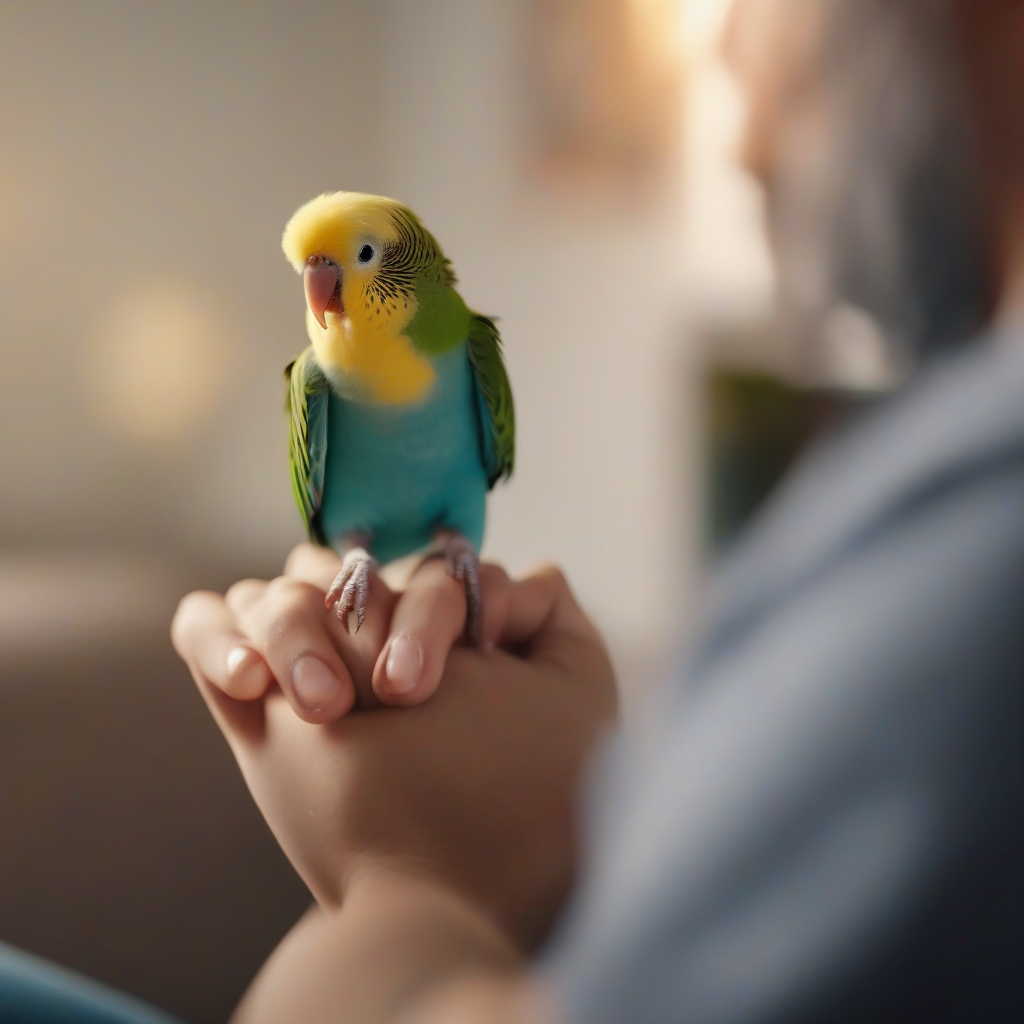
While adopting a new bird is exciting, it signifies a major change for your feathered friend. In this article, we'll delve into scientific strategies that accelerate your bird's adaptation to its new home, eliminate anxiety, and build a strong 'invisible thread of trust' between you. Discover every detail, from understanding your bird's silent signals to the power of positive reinforcement and routines.


In this article, we will deeply explore the insidious neurobiological effects of gut microbiome imbalance (dysbiosis) on your rabbit's brain health and provide scientific-based solutions to maintain mental vitality.

In this article, you can find comprehensive information on how pancreatitis in dogs not only affects the digestive system but also insidiously impacts the brain, its neuroinflammatory mechanisms, and lifesaving emergency intervention strategies.

Discover the 5 insidious effects of overfeeding, one of the most stealthy threats to your fish's health, causing neurometabolic destruction in their brains, and learn scientific feeding strategies to prevent this demise. Uncover the silent danger in your aquarium!
Adopting a new bird marks the beginning of a new adventure for both you and your feathered friend. However, this exciting period can also be a significant source of stress for your bird. Encountering an unknown environment, different sounds, smells, and a new "flock" can create 'adoption anxiety,' especially for birds with traumatic past experiences. So, what scientifically proven strategies can you implement to ensure your bird navigates this transition as comfortably as possible and to build an unbreakable 'invisible thread of trust' between you? In this in-depth guide, we will explore the steps that will make your bird feel secure in its new home and enhance its social adjustment.
Birds, being prey animals, are naturally very alert and sensitive creatures. Their first reflex upon entering a new environment is to carefully observe their surroundings and identify potential threats in order to survive. Therefore, the first days and weeks play a critical role in shaping your bird's experience in its new home.
The initial moments of your bird's arrival in its new home can create an "invisible shock" effect for them. The correct placement of the cage, the calmness of the environment, and its isolation from other pets are vital. Keep your bird away from noisy, high-traffic areas. Initially, simply ensure easy access to food and water. Place an adequate number of perches, a waterer, and a food dish in the cage. Partially covering the cage can help create a private, secure space where your bird feels safe. This will significantly reduce their adaptation anxiety. While methods for reducing adaptation anxiety in other pets like cats and dogs may differ, providing a safe space is a fundamental principle. Just as stated in the article Your Cat's 'Invisible Social Spaces' in Their New Home: Scientific Codes for Overcoming Adaptation Anxiety and Building Trust, creating 'social spaces' where an individual feels secure during the adaptation process to a new environment is vitally important, regardless of species.
Birds have a much richer communication language than humans often realize. In addition to their vocalizations, their body language, feather movements, and pupil dilation and constriction (pinning) convey a multitude of 'silent signals.' For example, puffed feathers can sometimes indicate relaxation, but also illness or stress; understanding these nuances deepens your relationship. You can discern whether your bird is tense, frightened, or relaxed from these subtle details. Approaching with slow, controlled movements, avoiding direct eye contact (which can be perceived as predatory behavior), and using a calm tone of voice are fundamental steps in building trust. Different species, even fish, interact with their environment through their own unique 'silent language of emotion,' as described in the article Your Fish's 'Silent Emotion Language': Scientific Codes for Deciphering Invisible Social Signals in the Aquarium After Adoption!.
Building trust with your bird is a process that requires patience. Being hasty can reinforce your bird's distrust of you.
Always use positive reinforcement when interacting with your bird. Allow them to approach you at their own pace, without forcing them. Turn interactions with you into a positive experience by using their favorite treats (appropriate for your bird's health). For instance, if they remain calm when you approach the cage or look at you, speak to them gently and offer a treat. When they start taking food from your hand, this is a significant indicator of trust between you. To understand your bird's stress level, the article Your Bird's 'Secret Scent Map': Decode Stress Triggers, Enhance Well-being! can guide you, as stress directly impacts learning and socialization processes.
Birds love routines. Regular feeding times, cage cleaning, interaction with you, and even the light cycle in the room ensure that your bird feels secure and in a predictable environment. Repeating certain activities at the same time each day increases your bird's trust in you and its surroundings. For example, humming the same melody when you approach their cage each morning or gently talking to them at specific times of the day can become a signal of safety.
Birds are social creatures and can form strong bonds with both their own species and humans. Strengthening these bonds is vital for their well-being.
Playing with your bird not only provides mental stimulation but also strengthens the bond between you. Offer safe toys and experiment with interactive games. Encouraging speech, singing, or teaching simple commands (e.g., getting them to come to your shoulder) encourages your bird to use its intelligence and interact more with you. Birds have highly developed problem-solving abilities, and activating these abilities through methods like those in Your Bird's 'Secret Intelligence Doors': 5 Scientific Strategies to Enhance Problem-Solving Abilities contributes greatly to their happiness.
Every bird has a unique personality and history. Some birds may get used to their owner within a few days, while others may take weeks or even months. Never be impatient or force your bird. Appreciate their progress and celebrate even small successes. Maintain gentle and positive interactions with them consistently. Remember that the bond you build with your bird lays the foundation for a deep, lifelong friendship.
Your bird's adaptation to its new home and bonding with you is a process that requires care, patience, and scientific understanding. As you build their 'invisible thread of trust,' appreciate every small step and strengthen this unique friendship with each passing day. With the right strategies, your bird will transcend being just a pet to become an inseparable part of your family.
