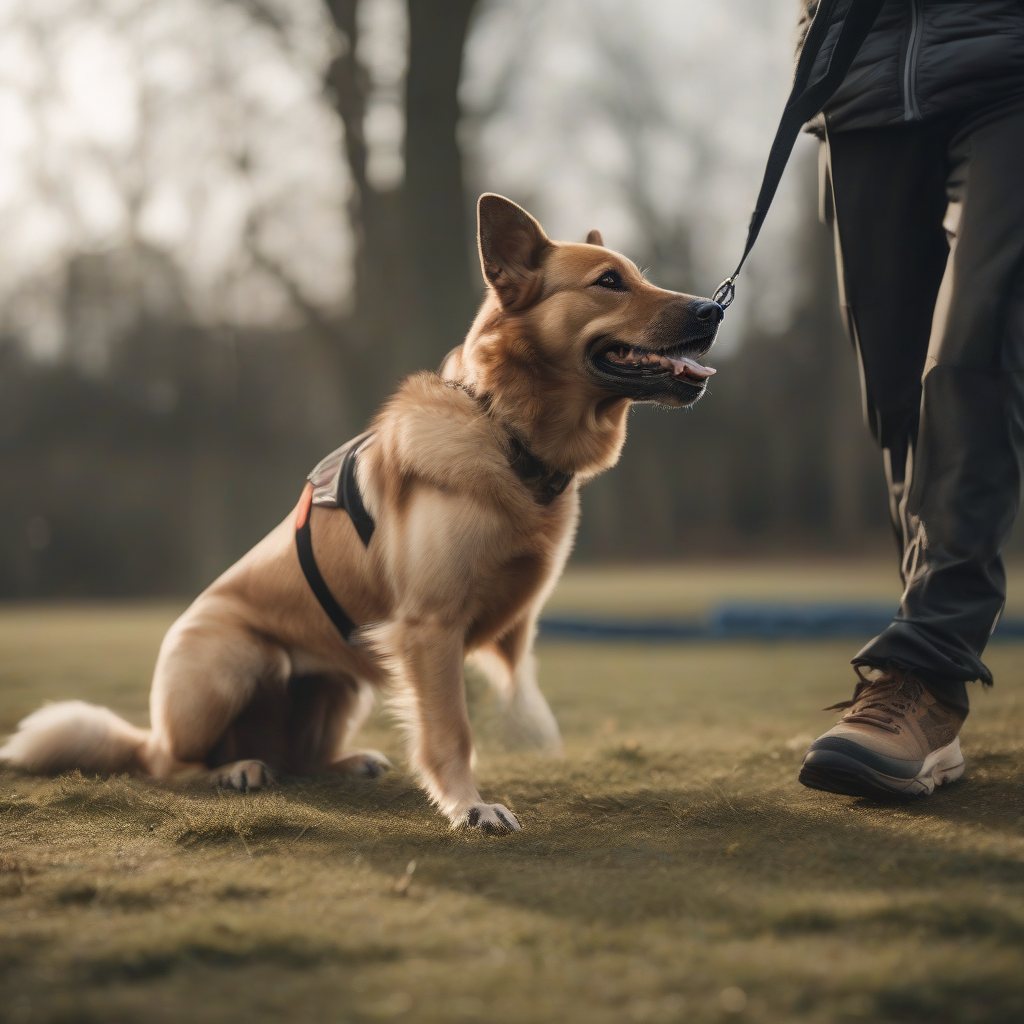
In this article, you will go beyond the basics of classical conditioning in dog training, discover your dog's hidden motivators, and learn advanced training techniques that will foster a deeper bond with your companion.


Discover the neurobiological signals of hidden stress your newly adopted cat experiences during adaptation to a new social environment. This article reveals 5 insidious signs of your cat's silent struggle and scientific strategies for peaceful, long-term harmony.

Your dog's anal sacs, located beneath the tail, can be hidden alarm bells often overlooked but profoundly affecting their quality of life. In this article, you will discover the 5 insidious neurobiological effects of anal sac problems on the brain and the lifesaving care secrets you need to know for your furry friend to live a peaceful life.
In this article, you will find comprehensive information on the insidious neurotoxic effects of heavy metal poisoning in aquarium fish, its symptoms, and lifesaving emergency intervention codes. This condition, which can arise from household water sources, improper equipment, or neglect, can severely threaten your fish's quality of life and lifespan.
When it comes to dog training, the first thing that comes to mind for many is 'classical conditioning'. This traditional method, based on a reward-punishment system, is widely used to teach dogs to obey commands. However, the world of our beloved companions is far more than just simple conditioned reflex machines. True bonding, deep understanding, and effective, lasting behavioral change require moving beyond classical conditioning. In this article, we will explore advanced training techniques that will uncover your dog's hidden motivators and transform them from a merely 'trained' dog into an intelligent, happy, and well-adjusted life companion.
Classical conditioning, popularized by Ivan Pavlov's famous experiments, is based on the principle that a response to a specific stimulus, when paired, becomes automatic over time. In dog training, this manifests as teaching a dog to sit when given the command 'sit', initially rewarding it with a treat, and eventually having it sit without the treat. While this method works in the short term, it ties the dog's motivation to external rewards and can stifle its intrinsic motivation. Moreover, it only ensures the dog does 'what it's supposed to do' without helping it understand why it exhibits this behavior or how it might react in different situations. This can lead us to overlook the deep motivations underlying complex behaviors, such as those discussed in The Subtle Face of 'Play Biting' in Dogs: Causes, Meaning, and Structural Training Solutions.
Every dog is an individual, and what drives them differs from one to another. Advanced training focuses on understanding these hidden motivators:
Once you understand your dog's individual motivations, you can implement more effective and humane training techniques:
Targeting: In this technique, the dog is taught to touch a specific object (e.g., a target stick). This is a fantastic foundation for transitions into different positions, guiding, and creating more complex movement sequences. Instead of just saying 'sit', you can guide the dog to a specific spot.
Self-Control Training: Teaching dogs to control their impulses has a profound impact on their overall behavior. Practicing the 'stay' command with varying durations and distractions can increase your dog's patience and control. This is particularly important for excited or impulsive dogs.
Shaping: In this technique, small steps of the desired behavior are reinforced, and these steps are gradually increased until the desired final behavior is achieved. For example, to teach a dog to open a door, steps such as looking at the doorknob, then touching it, then pushing it can be reinforced. This is an incredibly powerful method for teaching complex behaviors.
Recall Training and Safety-Focused Training: Especially in open areas, ensuring your dog returns to you when given a command can be life-saving. This is critical not only for play but also for ensuring the dog's safety in emergencies. The hidden motivations used in such training (e.g., playing a 'recall' game with a toy the dog loves) increase the effectiveness of the method.
Problem-Solving Based Training: Preparing puzzle toys that mentally stimulate dogs or an obstacle course can develop their natural problem-solving abilities. This can also be integrated with technological advancements like March 2026: Smart Toys for Your Dog's Mental Fitness – AI-Powered Brain Exercises and Next-Gen Play Guide.
Moving beyond classical conditioning in dog training not only makes your dog obedient but also deepens the bond between you, increases mutual trust, and supports your dog's overall happiness and mental well-being. Discovering hidden motivators and combining this knowledge with advanced training techniques will allow you to embark on an unforgettable journey with your dog. Remember, the best training is the training where you understand your dog's world and guide them with that understanding.
