Discover how your cat remembers objects out of sight and the mystery of their short-term memory in this comprehensive guide. Enhance your cat's cognitive abilities with scientific strategies.


Discover the types of burns your dog can suffer, the 5 insidious neurophysiological effects these burns create in the brain and body, and lifesaving emergency intervention strategies in this comprehensive guide. We shed light on the dangers behind forgotten household accidents from a scientific perspective.

Discover the neurobiological signals of hidden stress your newly adopted cat experiences during adaptation to a new social environment. This article reveals 5 insidious signs of your cat's silent struggle and scientific strategies for peaceful, long-term harmony.

Your dog's anal sacs, located beneath the tail, can be hidden alarm bells often overlooked but profoundly affecting their quality of life. In this article, you will discover the 5 insidious neurobiological effects of anal sac problems on the brain and the lifesaving care secrets you need to know for your furry friend to live a peaceful life.
Have you ever noticed your cat playing "Hide-and-Seek" with you, or sometimes acting as if a toy you just removed from their sight "never existed"? These intriguing behaviors offer clues into the complex cognitive processes of object permanence and short-term memory within your cat's mind. Veterinarians and animal behaviorists strive to understand the evolutionary origins and neurocognitive foundations of these mysterious abilities. So, are cats truly "forgetful," or are we simply not adept enough at interpreting their mental world? In this article, we will uncover 5 neurocognitive keys behind your cat's object permanence and short-term memory, embarking on a journey into the depths of their minds.
Object permanence is the ability to understand that an object continues to exist even when it is out of sight. It is a crucial indicator of cognitive development in infants and animals. Jean Piaget, who first defined this concept for human babies, noted that similar stages are observed in animals. Cats, thanks to the legacy of their predatory ancestors, are quite developed in this regard. Their ability to track prey that quickly disappears from view, follow it behind a bush, or locate a toy hidden in a corner of the room demonstrates their high level of object permanence. However, this ability may not manifest at the same level in all situations.
Your cat's ability for object permanence is directly linked to its hunting instinct and supported by specific neurocognitive circuits in its brain. For a predator, the disappearance of prey from sight is not an end, but a moment to change strategy. This is managed by complex interactions between the cat's prefrontal cortex (the center for decision-making and planning) and the hippocampus (memory formation). Neurotransmitters like dopamine, released during object tracking, reinforce this cognitive process. The satisfaction they experience when they find a hidden toy or discover a treat you've concealed is a reflection of this neurocognitive reward system. This can also be a key to understanding the neurocognitive facts about why your cat deliberately ignores toys.
Cats' short-term memory may not be as long-lasting as humans', but they are remarkably efficient in spatial memory. Research suggests that a cat's short-term memory can last for about 10 seconds. This is sufficient for a cat to remember a path it just took or an object it saw a short while ago. However, if an object remains hidden for longer or their attention is diverted, they might appear to have 'forgotten' its existence. Their spatial memory, on the other hand, is much stronger; they meticulously map out every corner of their home, resting areas, and potential dangers. This indicates that your cat's routine empire is not just a habit, but also a cognitive necessity.
Enriching a cat's mental world is about more than just playing games. It's possible to strengthen their memory and cognitive abilities with scientific strategies.
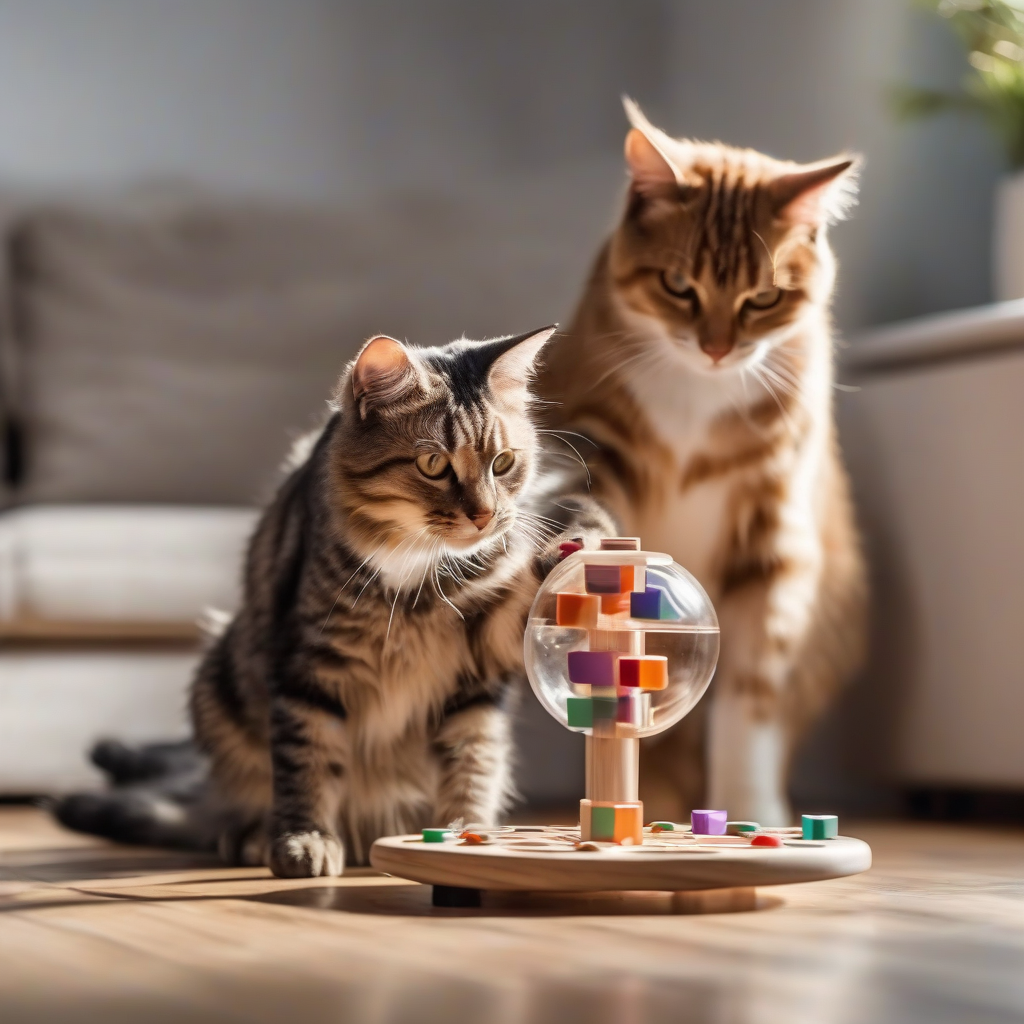
Interactive games are vital for a cat's mental health. Puzzle feeders, hidden treat games, or simulating hunting with a feather wand instead of a laser pointer activate the prefrontal cortex and hippocampus. Such games enhance your cat's problem-solving skills, reinforce its short-term memory, and sharpen its object permanence abilities. Mentally engaged cats have been observed to have lower stress levels and be less prone to behavioral problems.
Cats feel secure with predictability and routine. Having specific times for meals, play, and sleep routines supports the regular functioning of their hippocampus and basal ganglia in the brain. This is critically important for memory formation and cognitive stability. Routines help cats better understand their environment, consolidate learned information, and minimize stress. It also helps unlock the hidden neurological locks of their social intelligence during adaptation to a new environment.
Cats associate people, places, and objects with their positive or negative experiences. Especially strong emotional bonds with humans deeply affect memory processes. Positive reinforcement and loving interactions activate the brain's reward centers, making memories stronger and more lasting. Your cat will not forget time spent with a trusted human, a cherished treat, or a calming touch. This also forms the basis for understanding the hidden communication codes in your cat's body language and forming a deeper bond with them. On the other hand, traumatic or stressful moments can lead to lasting negative memories, which might manifest as anxiety signals.
Conclusion: Your cat's mind is far more complex and impressive than we might imagine. Object permanence and short-term memory form the foundation of their ability to survive and interact with their environment. By understanding these neurocognitive secrets, we can provide them with a richer, safer, and more mentally fulfilling life. Remember, every interaction you have with your cat is like drawing a new path on its mental map.
