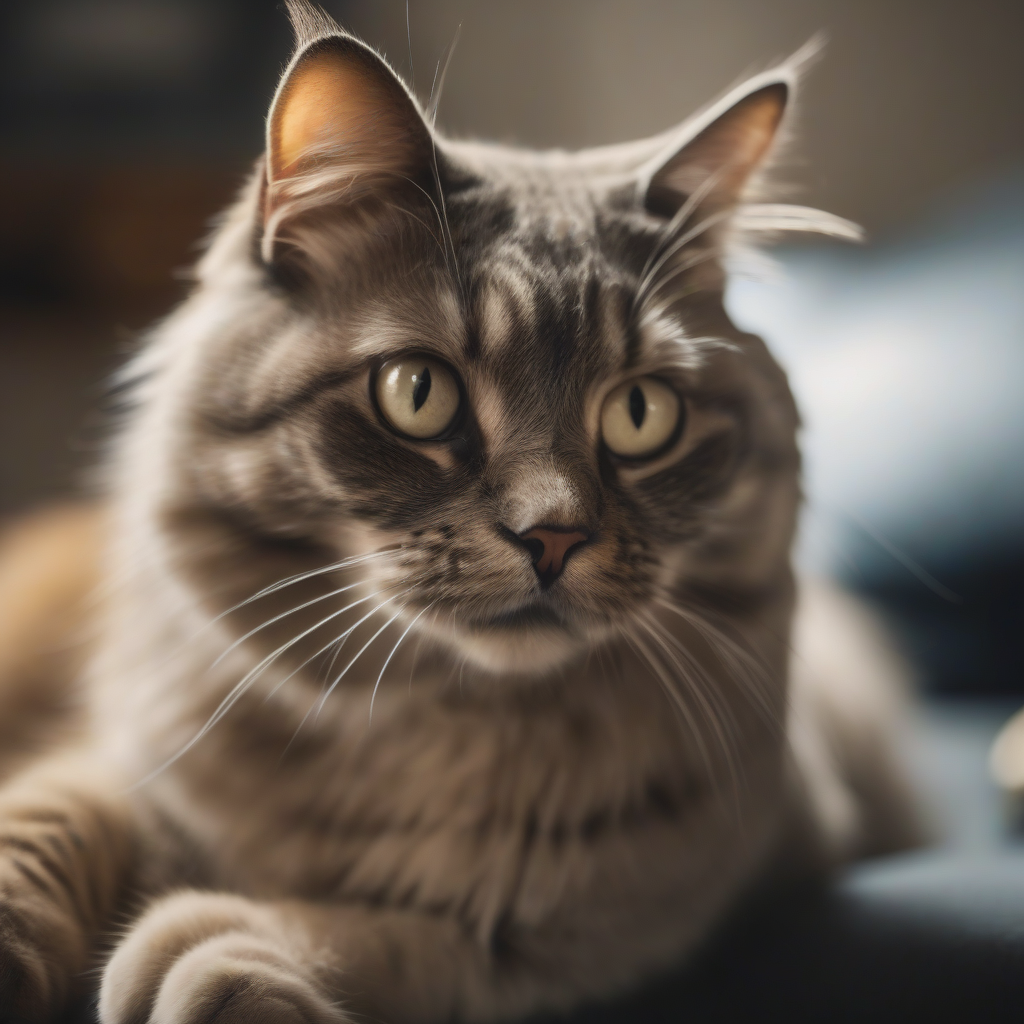
Discover scientific ways to decipher the mysterious behavioral signals to understand and manage your cat's stress. In this article, you will find comprehensive information on the 'invisible stress mirror' created by environmental stimuli in cats, how to recognize these signals, and what psychological solutions you can implement to improve your cat's well-being.


In this article, we will deeply explore the insidious neurobiological effects of gut microbiome imbalance (dysbiosis) on your rabbit's brain health and provide scientific-based solutions to maintain mental vitality.

In this article, you can find comprehensive information on how pancreatitis in dogs not only affects the digestive system but also insidiously impacts the brain, its neuroinflammatory mechanisms, and lifesaving emergency intervention strategies.

Discover the 5 insidious effects of overfeeding, one of the most stealthy threats to your fish's health, causing neurometabolic destruction in their brains, and learn scientific feeding strategies to prevent this demise. Uncover the silent danger in your aquarium!
Cats, by their very nature, are incredibly mysterious and sensitive creatures. Their dual role as both predator and prey leads them to hide signs of stress far more artfully than other domestic animals. This makes it challenging to understand their well-being and intervene early in potential problems. However, understanding your cat's "invisible stress mirror" can help you decipher how environmental stimuli reflect through tiny behavioral signals. With the latest insights in pet psychology as of March 2026, we open the doors of science to reading your cat's mood.
Cats' coping mechanisms for stress have been shaped by thousands of years of evolution. In the wild, showing weakness meant becoming a target for a predator or falling prey. Therefore, cats are instinctively programmed to hide their discomfort, pain, or fear. This "hiding" ability, however, poses a significant challenge for owners in a domestic environment.
The ancestors of cats, despite being small and agile hunters, were also potential prey for larger predators. This dual role required constant vigilance and suppression of any signs of weakness. Even in our domestic cats, these primal instincts remain very strong. Loud noises, sudden movements, or even minor changes in their routine can be perceived as a threat and instinctively trigger hidden stress responses.
Under stress, hormones like cortisol and adrenaline are released in cats' bodies. While short-term stress responses are beneficial for survival, chronic stress leads to these hormones remaining at consistently high levels. This can weaken the cat's immune system, lead to digestive issues, and in the long run, pave the way for serious health problems. The effects of psychological stress on physical health also apply to conditions affecting deep emotional bonds, such as adoption anxiety. In our article Your Cat's Invisible Empathy Map: Scientific Secrets to Building Deep Emotional Bonds in a New Home, we explored the importance of this connection in more detail.
Paying attention to subtle changes in your cat's behavior is vital for recognizing the stress they are experiencing. These signals are often overlooked or misinterpreted.
Cats communicate their emotions through their body language. A stressed cat's ears may be flattened sideways or turned backward. Their pupils might dilate, eyes may squint, or they might stare fixedly at one spot. The tail may be held close to the body, swish low, or suddenly twitch. The cheeks and whiskers may appear tense and pulled forward. These are silent but powerful indicators, in addition to the forms of communication discussed in Your Cat's 'Invisible Sound Signature': 5 Misunderstood Behavioral Codes Beyond Meows and Stress Shield Secrets! article.
Stress can disrupt a cat's basic habits. A cat that normally uses the litter box might suddenly start urinating in different parts of the house. Overeating or loss of appetite may occur. Sleep patterns can be disturbed; they might sleep less or become excessively lethargic. Such changes, especially in situations like moving to a new home, can also be part of the adaptation processes we discussed in our article Your Cat's 'Invisible Social Spaces' in Their New Home: Scientific Codes for Overcoming Adaptation Anxiety and Building Trust.
Stressed cats may sometimes start excessive grooming or fur pulling. This is a self-soothing mechanism but can lead to skin irritation and hair loss. These behaviors might indicate psychological stress rather than a medical issue.
A normally docile cat might exhibit aggressive responses like hissing, growling, or biting under stress. Conversely, a social cat might suddenly start hiding, avoiding people, or withdrawing from interaction with other pets. Such sudden behavioral shifts should be alarming.
Showing excessive reactions to noises previously ignored (vacuum cleaner, doorbell), fear of familiar objects (a new piece of furniture), or restlessness due to routine changes are all signs that your cat's stress level is rising.
For cats, stress often arises from changes in their environment. Understanding these triggers is the first step toward developing solutions.
In multi-cat households, competition over resources (food, water, litter boxes, resting areas) or incompatible social dynamics can lead to stress. Cats use scent glands to mark their territory, and interference with these areas can distress them.
Cats have a powerful sense of smell, and a new scent in the home (a new person, a new item, the scent of another animal) can be a source of threat or uncertainty for them.
Loud noises (fireworks, storms, renovations), sudden movements, or constant clutter in the home can become a chronic stress factor for cats.
Scientifically-based approaches are available to manage your cat's stress and provide them with a more peaceful life.
Providing an environment that satisfies a cat's natural instincts is fundamental to reducing stress. Elements like high climbing structures, hiding spots, interactive toys, and safe window perches meet their physical and mental stimulation needs. Play is an excellent way for cats to reduce stress and satisfy their natural hunting instincts. We discussed this topic in detail in Your Cat's 'Secret Play Language': From Hunting Instincts to Stress Reduction, Scientific Secrets and Behavioral Well-being Keys!.
Cats love routine. Predictable times for feeding, play, and rest help them feel secure. Providing a calm and predictable environment can significantly lower stress levels. The bond you build with your cat also affects their ability to cope with stress.
If your cat's stress symptoms are severe, long-lasting, or leading to physical health problems, seeking help from a veterinarian or a certified animal behaviorist is important. Ruling out an underlying medical cause and then implementing behavioral interventions are critical for your cat's well-being. Topics like Your Cat's 'Invisible Legacy': The Subtle Effects of Early Life Traumas on Adult Behavior and the Scientific Art of Healing! may particularly require in-depth behavioral analysis.
Reading your cat's 'invisible stress mirror' is the first step towards building a deeper bond with them and providing them with the peaceful life they deserve. By paying attention to subtle signals, you can intervene early and ensure your cat's happiness.
