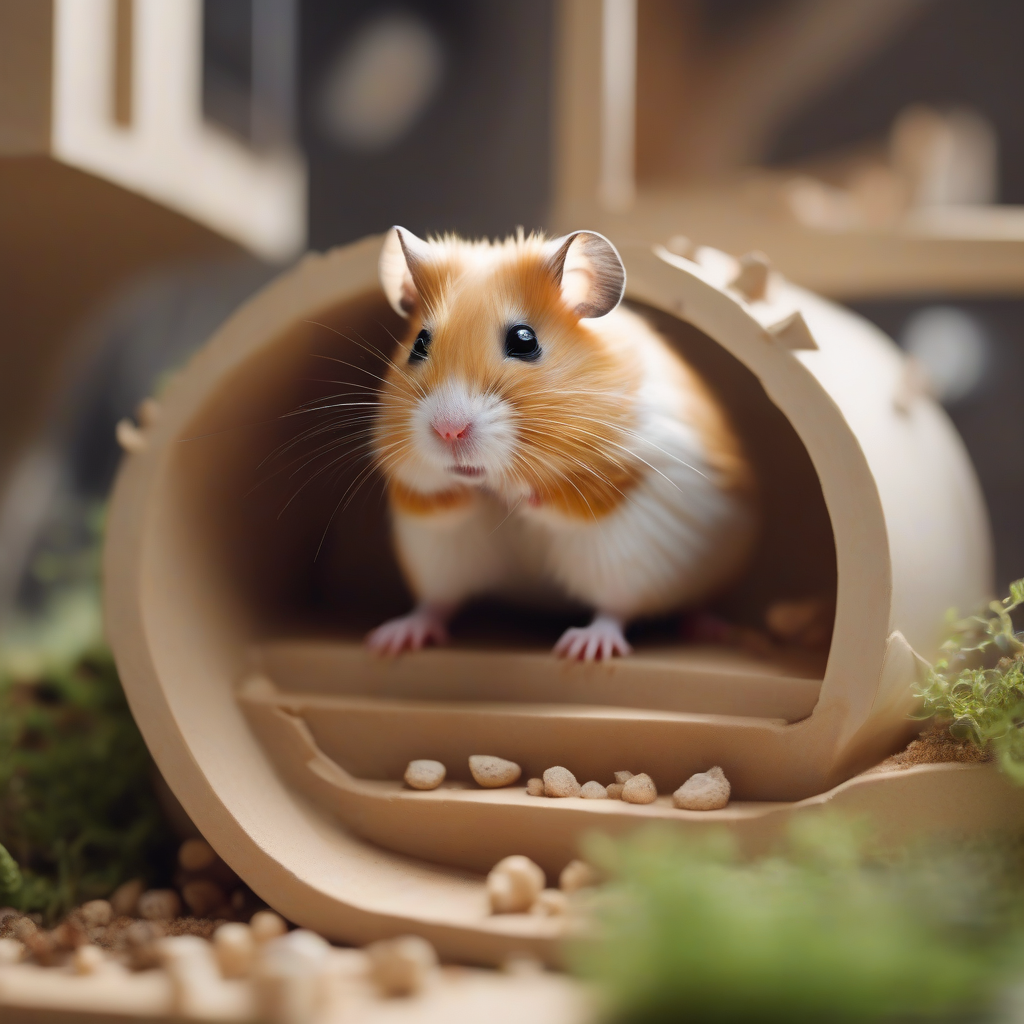
In this article, you will discover that your hamster's cage setup is not just a space, but a complex biomechanical system, and 5 scientific design principles that enhance behavioral well-being.


In this article, we will deeply explore the insidious neurobiological effects of gut microbiome imbalance (dysbiosis) on your rabbit's brain health and provide scientific-based solutions to maintain mental vitality.

In this article, you can find comprehensive information on how pancreatitis in dogs not only affects the digestive system but also insidiously impacts the brain, its neuroinflammatory mechanisms, and lifesaving emergency intervention strategies.

Discover the 5 insidious effects of overfeeding, one of the most stealthy threats to your fish's health, causing neurometabolic destruction in their brains, and learn scientific feeding strategies to prevent this demise. Uncover the silent danger in your aquarium!
Do you view your hamster's cage merely as a shelter? Science shows us that the living space of these small rodents is a complex 'micro-ecosystem' that directly affects everything from their physical health to cognitive development, emotional state, and natural behaviors. In this article, we'll help you understand the invisible dynamics within your hamster's cage and apply 5 next-gen, biomechanically-focused design principles to maximize their well-being.
Hamsters are, by nature, extremely active, exploratory creatures with a complex behavioral repertoire. Without adequate stimulation and a suitable environment, behavioral problems, stress, and even physical health issues can arise. The cage is their entire world; therefore, its design must be shaped according to their instinctive needs (digging, exploring, hiding, climbing, food hoarding). This is where 'biomechanics' comes in. Biomechanics studies the interaction between living organisms and their mechanical systems within their environment. The biomechanical secrets of a hamster cage help us understand how every detail, from the slope of tunnels to the height of platforms, the size of the wheel to the texture of the bedding material, affects the animal's movement, muscle development, balance ability, and overall mental stimulation.
An improper design can lead to stereotypic behaviors like bar chewing, frustration due to insufficient tunneling opportunities, or overly hierarchical situations. Therefore, by treating their cages as a micro-ecosystem, understanding how each component serves your hamster's physical and mental needs is critically important. Our article Your Hamster's 'Invisible City Planner': The Mysterious Psychology and Physiology of Underground Tunnel Networks! offers more in-depth information on this topic.
Hamsters are inclined to explore not only horizontally but also vertically. Providing multi-tiered cages or safe platforms and ramps at different heights allows them to exercise their muscles and discover new perspectives. The key is to ensure that the materials used (e.g., untreated, rough wood or specially designed, non-slip ramps) are safe and paw-friendly. Wire mesh platforms should be avoided, as they can lead to serious foot problems like 'bumblefoot'. These layers should also be connected by hidden passages and tunnels to offer a richer exploration route. Safe climbing branches or ropes, especially placed in the upper parts of the cage, enhance your hamster's agility and provide mental stimulation.
A hamster cage should not be a monolithic space. Creating 'micro-habitats' that offer different textures, scents, and even light levels enhances your hamster's sensory richness. For instance, one corner might feature a dedicated sand bath area, another might have hay or dried grasses for chewing and natural foraging, and a third could house dark, secure tunnels for sleeping and hoarding. This diversity stimulates their natural behaviors and prevents monotony. Encouraging foraging behaviors by hiding food in various spots boosts mental engagement.
The material and placement of the cage directly influence the microclimate of your hamster's living space. Plastic or glass cages may offer better insulation than wire cages but can lead to issues like ammonia buildup if ventilation is insufficient. Conversely, a wire cage with excessive airflow can cause sudden temperature changes and lead to colds. An optimal design should ensure a stable, comfortable temperature in sleeping areas while guaranteeing adequate ventilation throughout the cage. Care should be taken to avoid placing the cage in direct sunlight or near heat sources like air conditioners or heaters. These details directly affect your hamster's ability to regulate body temperature and their respiratory health.
Hamsters are intelligent and capable of problem-solving. Structures provided in the cage should offer not only physical activity but also mental stimulation. Food puzzles, simple mazes, or hamster-safe puzzle toys support their natural cycles of exploration and problem-solving. Such cognitive enrichment activities help reduce stress and improve behavioral well-being. For more ideas on this topic, you can refer to our article Your Hamster's 'Secret Toy Engineering': 5 Scientific Ways to Improve Problem-Solving Skills!.
For hamsters, being prey animals in nature, a sense of security is a fundamental need. Providing hiding spots and tunnels with multiple entry/exit points in the cage helps them feel safe. This 'escape route' psychology helps them manage stress, especially in the face of potential threats (sudden noises, rapid movements). A single entry/exit hideout can make a hamster feel trapped, whereas multiple options give them a sense of control, which is a critical factor for behavioral well-being. Our article Your Hamster's 'Secret Ground Engineering': Scientific Codes from Cage Substrate to Social Stress Triggers Revealed! further details the role of cage substrate in this perception of security.
Your hamster's living space is more than just four walls; it's their entire world. Understanding this space as a 'silent micro-ecosystem' and designing it with biomechanical principles ensures your tiny friend lives a happier, healthier life, exhibiting their natural behaviors. Conscious design will reduce stress while increasing mental and physical stimulation, thereby strengthening the bond between you and your hamster. Remember, always consult a veterinarian for any health or behavioral concerns.
