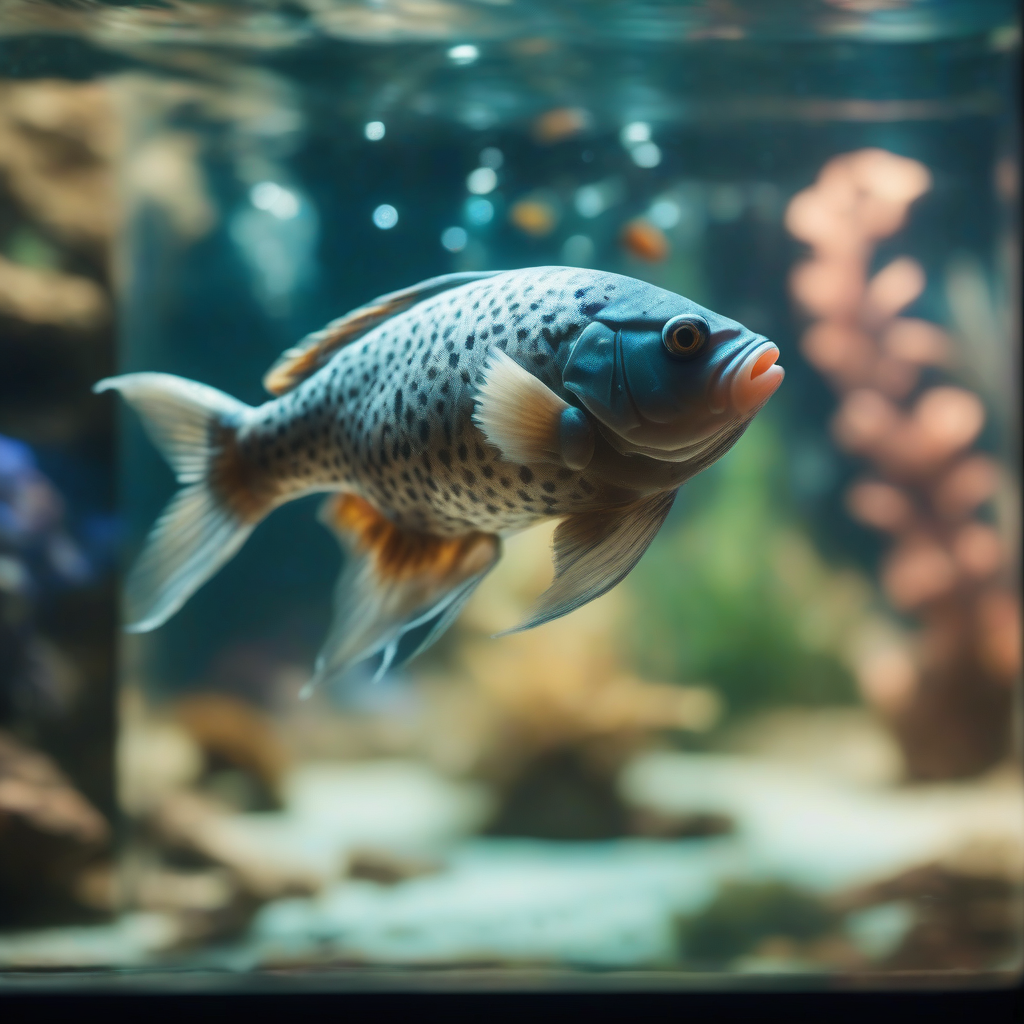
Did you know that aquarium fish can learn not only through simple reflexes but also through advanced learning and cognitive abilities? In this comprehensive guide, you'll discover advanced behavioral training strategies and neurocognitive development secrets to unlock your fish's mental potential and strengthen your bond with them.


Discover the types of burns your dog can suffer, the 5 insidious neurophysiological effects these burns create in the brain and body, and lifesaving emergency intervention strategies in this comprehensive guide. We shed light on the dangers behind forgotten household accidents from a scientific perspective.

Discover the neurobiological signals of hidden stress your newly adopted cat experiences during adaptation to a new social environment. This article reveals 5 insidious signs of your cat's silent struggle and scientific strategies for peaceful, long-term harmony.

Your dog's anal sacs, located beneath the tail, can be hidden alarm bells often overlooked but profoundly affecting their quality of life. In this article, you will discover the 5 insidious neurobiological effects of anal sac problems on the brain and the lifesaving care secrets you need to know for your furry friend to live a peaceful life.
Often perceived as silent dwellers in our aquariums, fish actually possess surprisingly complex learning and cognitive abilities. Years of scientific research have shown that fish can learn not only through simple reflexes but also through advanced mental processes such as operant conditioning, memory formation, and even problem-solving. So, how can we unlock this "secret intelligence games" potential in our aquariums? In this article, we will explore advanced behavioral training strategies, backed by scientific data, to support your fish's neurocognitive development and strengthen the bond between you. Our aim is to prove that fish are not just passive creatures to be observed, but rather individuals capable of interaction and mental stimulation.
While the brain structure of fish differs from that of mammals, it contains the basic neural circuits necessary for learning and memory. Hippocampus-like structures play a role in spatial learning and memory formation, while the telencephalon (forebrain) is instrumental in regulating complex behaviors. This indicates that fish are capable of much more than simply understanding basic commands.
Fish can learn to respond to a stimulus through classical conditioning, much like Pavlov's dogs. For instance, if they associate a light signal with food, they will begin to anticipate food just by seeing the light. Even more significantly, they learn by associating specific behaviors with a reward or punishment through operant conditioning. This is the cornerstone of advanced training. As noted in our article, 'Your Fish's 'Invisible Arena of the Mind' in the Aquarium: 5 Neurocognitive Secrets to Teaching Simple Commands!', these fundamental principles form the first step towards more complex training.
Fish have been proven to possess a surprisingly good memory through maze experiments and long-term conditioning studies. Once a fish learns a specific task, it can retain this information for weeks, or even months. They also exhibit problem-solving abilities, such as overcoming simple obstacles or finding a specific reward. The article, 'Your Fish's 'Visual Problem-Solving' Ability: 5 Neurocognitive Secrets to Overcoming Obstacles and Finding Rewards in the Aquarium!', provides in-depth information on this topic. These abilities offer exciting opportunities to interact actively with fish, beyond just observing them.
Establishing an effective training routine with fish requires patience, consistency, and the application of correct methods. Just like with other pets, adhering to fundamental principles in fish training is key to success.
Positive reinforcement is the foundation of fish training. Immediately providing a reward (a small piece of food) when a desired behavior is exhibited (e.g., touching your finger, swimming through a hoop) increases the likelihood of that behavior being repeated. Delivering rewards at the right time and in the right amount maximizes the effectiveness of the learning process. The type and quality of food are also important in this process; our article, 'The Secret Neurochemistry of Fish Food: 5 Critical Species-Specific Nutrition Secrets for Optimal Aquarium Well-being', can provide guidance on this. The stronger the fish's association with the reward, the faster the learning process will progress.
When teaching complex behaviors, it is essential to break them down into small, manageable steps (shaping). For example, if you want to teach a fish to press a button, you can first reinforce approaching the button, then touching it, and finally pressing it. By rewarding each successful step, the fish is guided towards the ultimate goal. This method prevents confusion for the fish and keeps their motivation high.
You can design various intelligence games to challenge your fish's mental capacities and entertain them. These games not only provide entertainment but also develop your fish's cognitive skills.
Fish have the ability to distinguish colors and shapes. You can teach them to swim through different colored rings or to touch a specific shape. Sound-based conditioning is also possible; for example, you can teach them to respond to a specific bell sound. This approach deepens environmental perception, as explored in articles like 'Your Fish's Secret 'Electromagnetic Whispers': 5 Neurocognitive Secrets of Environmental Perception and Behavioral Impacts!'. Diverse sensory stimuli keep fish brains active.
By creating small mazes from transparent materials, you can help your fish develop their navigation and problem-solving skills. Simultaneously, you can teach them to trigger a specific action using small underwater buttons or levers. Such activities enhance their mental agility and make the aquarium environment more dynamic.
Aquarium vegetation and decorations provide natural hiding and exploration areas for fish. However, adding interactive toys that float or move, or where food can be hidden, stimulates their natural curiosity and problem-solving instincts. Our article, 'The 'Neurocognitive Shield' of Live Plants in Fish Aquariums: 5 Unknown Effects of Hiding Spaces and Stress Management Secrets!', emphasizes the importance of environmental enrichment. A rich environment supports learning and adaptation.
For the training process to be successful and stress-free for the fish, optimal aquarium conditions are critical. The physiological and psychological well-being of fish directly impacts their learning abilities.
Fish cannot learn under stress. Aquarium water quality (pH, ammonia, nitrite, nitrate levels), temperature, and other parameters must be perfect. The article 'Your Fish's 'Hidden Anxiety Algorithm': Invisible Triggers in the Aquarium and 5 Neurocognitive Secrets of Mental Well-being!' can help you understand anxiety-inducing triggers. A stressed fish may resist training or forget what it has learned. Regular water changes, appropriate filtration, and providing a species-specific environment are essential.
A balanced and nutrient-rich diet is vital for your fish's overall health and cognitive functions. Nutrients that support neurological health, such as Omega-3 fatty acids, can positively affect learning and memory abilities. Quality foods ensure optimal brain function, thereby improving their training performance.
We hope you now see that your fish are not just decorative pieces, but rather surprising creatures open to mental stimulation and interaction. Through advanced behavioral training techniques, you can discover the 'secret intelligence games' of your aquarium friends, enhance their quality of life, and gain an enjoyable hobby for yourself. Remember, every small success is a big step for both you and your fish.
