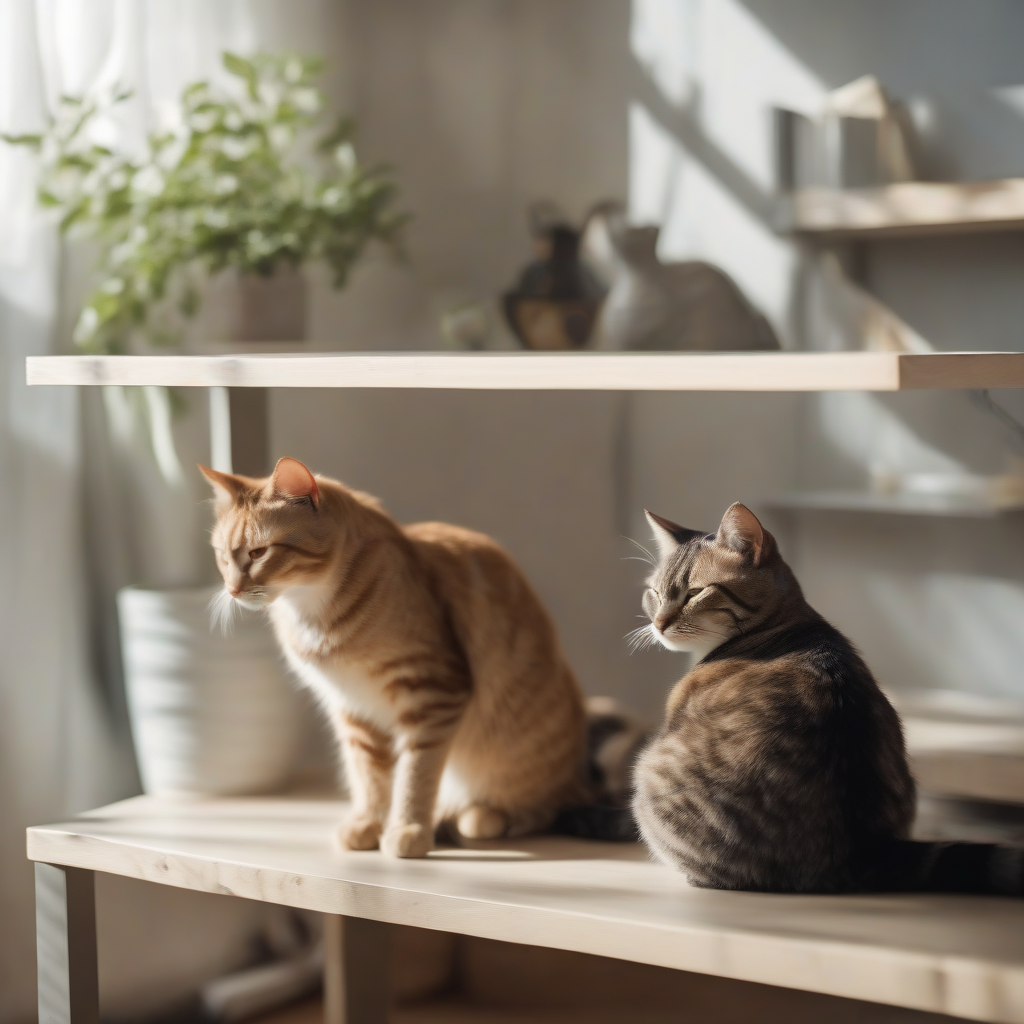
In this article, you will discover the hidden causes of often-overlooked territorial stress in multi-cat households and how to scientifically resolve "invisible border" conflicts that threaten your cats' social well-being. Achieve balance in your home with innovative strategies and practical applications for peaceful coexistence.


In this article, you will discover the 5 insidious neurobiological effects of the Encephalitozoon Cuniculi parasite, which is often overlooked in rabbits but severely affects the brain, along with lifesaving early diagnosis methods.

In this article, we will deeply explore the insidious neurobiological effects of gut microbiome imbalance (dysbiosis) on your rabbit's brain health and provide scientific-based solutions to maintain mental vitality.

In this article, you can find comprehensive information on how pancreatitis in dogs not only affects the digestive system but also insidiously impacts the brain, its neuroinflammatory mechanisms, and lifesaving emergency intervention strategies.
Living in a multi-cat household is a dream for many cat owners. However, this dream can sometimes turn into silent wars due to the "invisible borders" within the home. Cats are inherently highly territorial creatures, and this territoriality can create tension when sharing resources and spaces with other cats in a home environment. In this article, we will delve into the scientific foundations of territorial stress often overlooked in multi-cat homes, its subtle signals, and innovative strategies to ensure your cats live together peacefully. Our goal is to ensure your cats have a healthy social life, not just physically but also mentally.
For cats, territory is not just a geographical area, but also a source of security, resources, and identity. A cat's need for territory is deeply connected to its survival instincts. Even in a home environment, this basic instinct remains. Every cat needs its own personal space, resources (food, water, litter box), and even favorite sleeping spots. When these needs are not met or are perceived as threatened, territorial stress arises.
Cats largely perceive the world through their sense of smell. They leave "scent signatures" in their environment via pheromone glands on their faces and paws. These pheromones act as an identification card for cats, an indicator of their emotional state, and most importantly, a territorial marker. Rubbing their cheeks on objects, using their claws, or spraying urine are all ways they draw their "invisible maps" at home. In a multi-cat household, the overlap of these scent maps or one cat trying to overwrite another's territorial mark can be the beginning of silent tensions. To understand the art of initial introductions and building trust with other pets, you can draw inspiration from the article 'Rabbit Codes' in Your Rabbit's New Home: Scientific Secrets of Initial Introductions and Trust Building Art (March 2026), as similar principles may apply across species.
Cats depend on essential resources like food, water, litter boxes, and safe sleeping areas for survival. When the number and distribution of these resources are insufficient in a multi-cat home, a "perception of scarcity" develops among cats. Even if this doesn't lead to direct fights, it creates an environment of constant competition and tension. A cat may feel threatened even when another is eating or approaching the water bowl. This situation can lead to chronic stress and behavioral problems in the long run. Competition for a vital resource like water, in particular, can trigger health issues as mentioned in Your Cat's 'Invisible Water Need': The Dry Food Trap and Hidden Nutritional Secrets Saving Urinary Tract Health!.
Cats are generally creatures that avoid conflict. Therefore, signs of territorial stress can often be silent and go unnoticed. Instead of overt fights, micro-tensions and subtle body language cues indicate a problem in your home.
Situations such as cats not eating at the same time, waiting for their turn to drink water, or preferring one litter box over another, while seemingly simple preferences, can actually be signs of resource competition. One cat may strategically position itself or block pathways to prevent another from using a resource.
Stressed cats may avoid direct eye contact with each other, tuck their tails between their legs, or flatten their ears. A normally social cat suddenly appearing more withdrawn or fearful could be a sign of territorial stress. The article Silent Bridges in Your Cat's New Home: 5 Scientific Communication Secrets to Dissolve Adaptation Anxiety (March 2026) can help you better understand the communication dynamics between cats.
While territorial stress may not lead to open fights, it can manifest as one cat suddenly attacking or ambushing another. These attacks usually occur at a transition point (doorway, hallway) or near a resource (food bowl, litter box) and aim to displace the other cat from a specific area. This can also be linked to situations of 'Silent Leadership' in Your Cat's New Home: Ununderstood SOS Signals Post-Adoption and 5 Scientific Codes for Building Trust that arise post-adoption.
Cats under chronic stress may exhibit excessive grooming or licking specific areas as a self-soothing mechanism. These behaviors are often a physical symptom of stress, potentially leading to skin irritation or hair loss.
One of the most overt territorial marking behaviors, urine spraying, is a cat's way of defending its territory against other cats or expressing its stress. Similarly, excessive scratching at strategic points can also carry a territorial message.
Implementing scientifically-based strategies is essential for managing territorial stress and ensuring peace in multi-cat homes. The goal is to make every cat feel secure with their own personal space and resources.
Follow the "one more than the number of cats" rule: Number of cats + 1 food bowl, number of cats + 1 water bowl, and number of cats + 1 litter box. Distribute these resources in different areas of the house, away from pathways, and in locations where each cat can easily access them without necessarily seeing each other. This will reduce resource competition.
Cats love vertical spaces. High shelves, cat trees, window perches provide cats with a sense of security and allow them to observe their surroundings from above. This greatly reduces territorial tension, especially in homes with multiple cats, by meeting each cat's Your Cat's 'Hidden High Place' Need: Not Just Climbing, But the Key to Serenity! (March 2026) for a hidden high place. Understanding and adapting spaces for the 'Silent Architects' in your home—your cats' needs—is one of the scientific codes to break their anxieties: The 'Silent Architects' in Your Cat's New Home: Scientific Codes to Break Anxiety During the Adaptation Process.
Synthetic pheromone diffusers (e.g., Feliway) can help cats feel calmer and more secure. These diffusers mimic the calming pheromones naturally released by cats. Additionally, environmental enrichments like tunnels, hiding boxes, and interactive toys reduce cat stress and allow them to use their energy in positive ways.
Cats thrive on routines. Providing predictability in meal times, playtimes, and general household order reduces anxiety. Cats feel more secure when they know what to expect, which can lower territorial tensions.
Spending quality one-on-one time with each cat strengthens the bond of trust. Short positive reinforcement-based training sessions engage your cats and reduce stress. You can gently redirect unwanted behaviors with reward-based approaches. This not only reduces territorial tension but also increases your cats' trust in you and each other.
Understanding and managing territorial stress in a multi-cat home is a scientific process that requires patience and observation. By recognizing your cats' "invisible borders," optimizing resources correctly, and enriching their environment, you can put an end to their silent wars and create a peaceful, happy home for everyone. Remember that every cat is an individual, and being sensitive to their needs is key to maintaining balance in your home. Through these approaches, you can alleviate adaptation anxiety among your cats and help them build deep, harmonious bonds.
