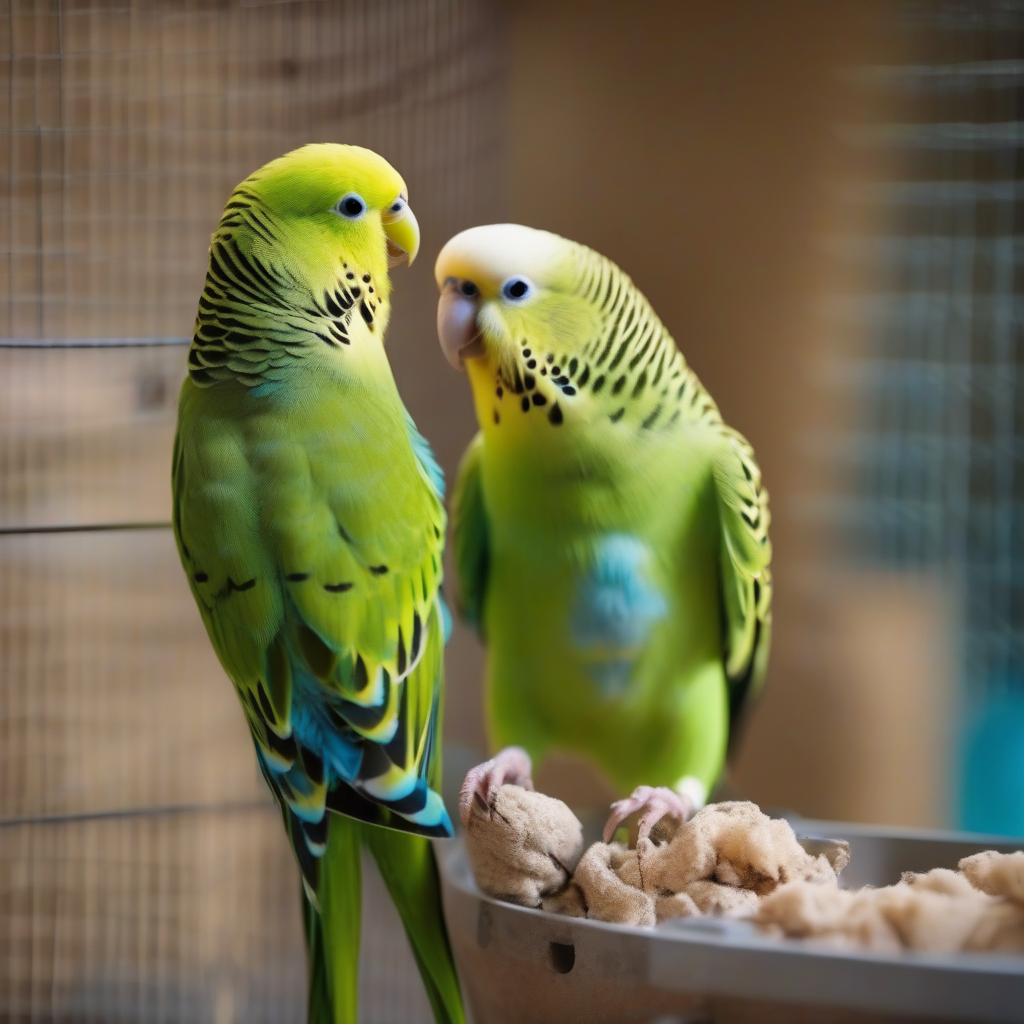
In this article, you will discover the hidden neurocognitive processes your bird experiences when meeting a new cage mate and scientific strategies to help them adapt.


Discover the types of burns your dog can suffer, the 5 insidious neurophysiological effects these burns create in the brain and body, and lifesaving emergency intervention strategies in this comprehensive guide. We shed light on the dangers behind forgotten household accidents from a scientific perspective.

Discover the neurobiological signals of hidden stress your newly adopted cat experiences during adaptation to a new social environment. This article reveals 5 insidious signs of your cat's silent struggle and scientific strategies for peaceful, long-term harmony.

Your dog's anal sacs, located beneath the tail, can be hidden alarm bells often overlooked but profoundly affecting their quality of life. In this article, you will discover the 5 insidious neurobiological effects of anal sac problems on the brain and the lifesaving care secrets you need to know for your furry friend to live a peaceful life.
Birds are intelligent and social creatures. While a bird may appear content alone, introducing a cage mate under the right conditions can lead to a richer social life. However, incorporating a new individual into their territory can create unexpected complexity within your bird's sensitive social and neurocognitive world. This is shaped by the activation of hidden mechanisms, fundamental to their 'social intelligence,' which are often overlooked.
As of April 2026, the importance of neurocognition in the world of pets is increasingly recognized. Understanding the complex social dynamics of birds not only ensures happier and healthier pets but is also key to preventing behavioral issues and mitigating potential stressors.
Introducing a new bird companion signifies a major life change for your bird, and successfully managing this transition hinges on understanding how their brains work.
In this article, we will examine five key neurocognitive locks that your bird encounters when meeting a new cage mate and provide science-based strategies to transform this challenging transition into an enjoyable experience for both you and your feathered friends.
Every bird forms a profound 'mental map' of its territory. This map encompasses not just physical boundaries but also social hierarchies and daily routines. The introduction of a new individual can be immediately perceived as a 'territorial infringement' on this delicate map. Your bird's brain analyzes the scent, sound, and presence of the unfamiliar entity, conducting a new threat assessment. Initially, this can lead to aggressive behaviors or extreme timidity.
At the core of this neural mapping lies the integration of visual and olfactory senses. Your bird determines whether the newcomer 'belongs' or 'how threatening' they are by processing information received from these two sensory channels. If the new bird threatens the existing 'social fabric,' your bird's brain enters an alarm state, activating defense mechanisms.
To manage this, do not immediately add the new bird to the existing cage. Place the two cages side-by-side, allowing them to 'get acquainted' from a distance. This helps both birds neurologically adapt to the other's presence and develop a perception of their territory 'expanding.' This process is another dimension of how environmental factors influence social adjustment, as touched upon in our article, Your Bird's 'Hidden Climate Focus Point': Unknown Neurobiological Effects of Cage Placement and Lighting!.
As birds are flocking creatures, they naturally tend to establish a social hierarchy. The addition of a new bird necessitates the reshaping of this hierarchy. This process occurs through 'secret communication codes.' Factors such as body language, vocalizations, and eye contact directly influence your bird's brain chemistry and establish new social dynamics.
Specifically, body language and vocalizations play a critical role in your bird's interaction with the newcomer. An upright posture, puffed-up feathers, slightly spread wings, or specific sounds convey signals of dominance, submission, or curiosity. If the new bird fails to correctly interpret these signals, or if your bird cannot effectively communicate its own signals, misunderstandings and conflicts can arise.
To understand these communication codes, applying principles from articles like Your Bird's 'Secret Communication Codes': 5 Scientific Secrets of Tones and Body Language in Training! and Your Bird's 'Secret Art of Persuasion': Unlocking the Neurocognitive Codes of Training with Positive Reinforcement! will be beneficial. Patience allows both birds to 'listen' to each other and understand their respective social signals. Positive reinforcement rewards peaceful interactions, reinforcing appropriate social behaviors.
Adapting to a new social environment is a stressful process for any creature, and birds are no exception. A new cage mate can shake your bird's sense of security. Stress hormones in the brain (such as cortisol) rise, negatively impacting their overall well-being. Prolonged stress can lead to various health issues, from respiratory problems to feather plucking.
The key to reducing this stress load is building trust. Facilitating adaptation to the new environment triggers a neurocognitive adjustment process, as discussed in Your Bird's 'Invisible Social Chips': 5 Deep Neurocognitive Keys to New Environment Adaptation and Trust Building. During this process, positive experiences help release 'bonding' and 'relaxation' hormones like oxytocin in your bird's brain.
To expedite the adaptation process, limit direct interaction between the birds initially. Give them individual attention, feed them, and speak to them gently. Positive interactions with you for both birds will reinforce their sense of security and encourage them to feel more at ease with each other over time. This 'human-mediated trust' will, in turn, encourage them to be less wary of each other. The article Your Bird's 'Human-Faced Flock': 5 Neurocognitive Secrets of How Your Attachment Styles Shape Your Bird's Social Development! details the impact of this human bond on the bird's overall social development.
Birds constantly learn about the world around them. A new cage mate presents a novel 'social laboratory' that challenges their learning and adaptation skills. Your bird observes the newcomer's behaviors, analyzes the consequences of its own actions, and develops strategies to adapt to this new situation.
This adaptation process directly engages your bird's cognitive abilities. Articles like Your Bird's 'Secret Learning Map': 5 Neurocognitive Secrets to Understanding Simple Commands in the Aquarium! demonstrate the extent to which birds can process complex information. Similarly, when adapting to a new social environment, birds learn new 'social norms.'
To support this learning process, be patient and manage potential conflicts. If necessary, continue observing the two birds in separate cages. Observing which behaviors lead to positive or negative outcomes will help your bird understand the new social norms. The strategies outlined in Your Bird's 'Hidden Decision Mechanisms': 5 Neurocognitive Solutions in Moments of Uncertainty and Trust-Building Strategies! can help your bird make more appropriate social decisions during these moments of uncertainty.
The sharing of resources such as food, water, toys, and resting areas within the cage plays a significant role in bird social interactions. The addition of a new bird can create potential competition for these resources. Your bird's brain develops a complex 'resource management' mechanism that determines how much and how to share these resources.
This process affects both the individual bird's welfare and the overall flock balance. If resources are insufficient or sharing is uneven, it can lead to constant stress, fights, and even sick birds. Respiratory health is also directly affected; for instance, nutritional deficiencies can weaken the respiratory system, as highlighted in Your Bird's 'Secret Respiratory Shield': 5 Neurobiological Effects of Feed Choice You Never Knew and Secrets to Protecting Airways!.
For successful adaptation, provide an adequate number and variety of resources. Increasing the number of feeders, water dishes, and resting spots helps reduce competition. Additionally, providing quiet corners where both birds can reach them separately allows them to meet their individual needs and reduce stress. This enables them to be less competitive towards each other and behave more harmoniously.
Introducing a new cage mate to your bird is a process that requires patience, observation, and scientific understanding. Understanding these five neurocognitive locks will help you interpret their behavior better and make this process as smooth as possible. Remember that every bird is unique, and every adaptation process is specific. Going beyond simply wishing the best for your feathered friends and offering more informed care by understanding how their brains work will enhance their quality of life.
If you notice signs of emergency such as sudden behavioral changes or difficulty breathing in your bird, follow the information in our emergency intervention articles such as Your Bird's 'Last Breath Battles': 5 Critical Lifesaving Scientific Interventions for Acute Respiratory Obstruction! or Your Bird's 'Hidden Pulse Alarm': 5 Critical Signs and Scientific Interventions for Sudden Hypotension! and consult a veterinarian as soon as possible.
