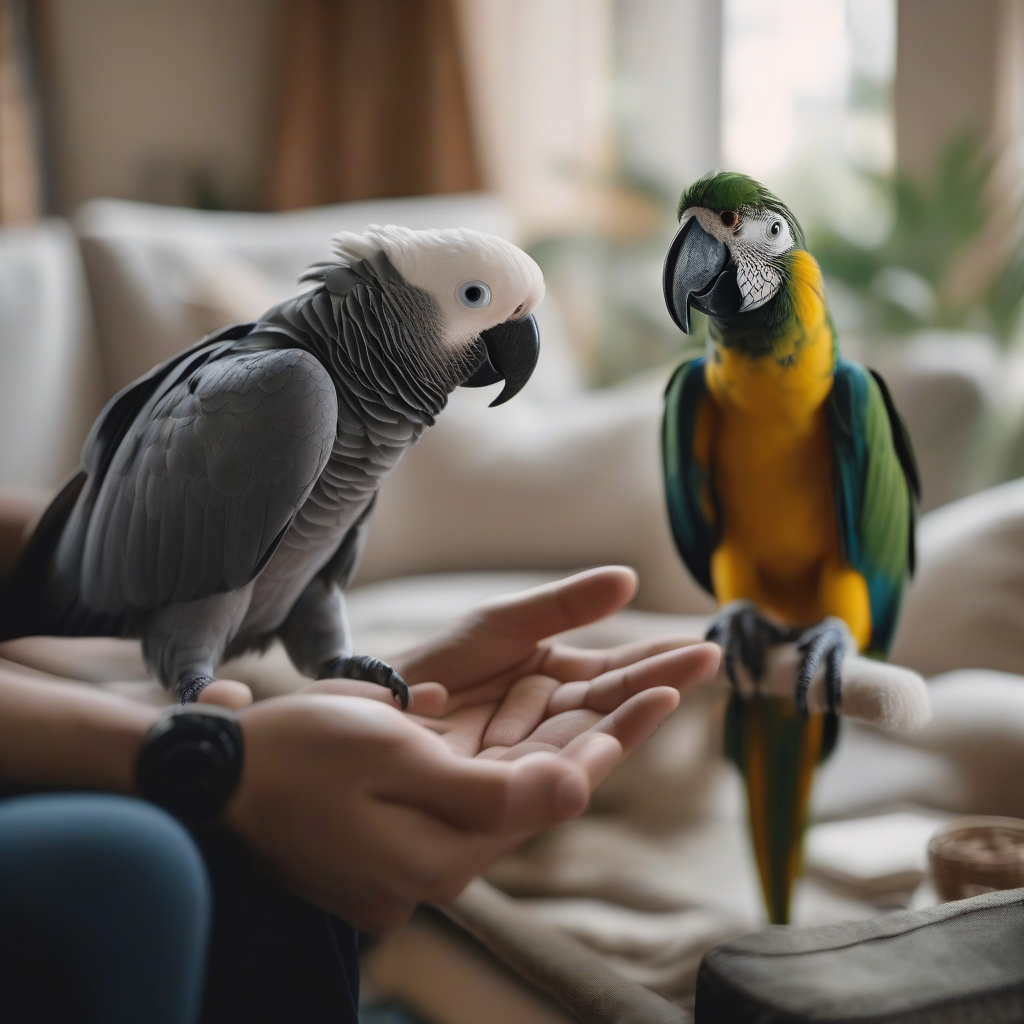
In this article, you will discover your bird's 'justice' expectations in human interaction, their behavioral codes, and scientific secrets for building a long-lasting, deep bond.


In this article, you will discover the 5 insidious neurobiological effects of the Encephalitozoon Cuniculi parasite, which is often overlooked in rabbits but severely affects the brain, along with lifesaving early diagnosis methods.

In this article, we will deeply explore the insidious neurobiological effects of gut microbiome imbalance (dysbiosis) on your rabbit's brain health and provide scientific-based solutions to maintain mental vitality.

In this article, you can find comprehensive information on how pancreatitis in dogs not only affects the digestive system but also insidiously impacts the brain, its neuroinflammatory mechanisms, and lifesaving emergency intervention strategies.
Pet birds are surprisingly complex creatures, known for their intelligence and social structures. The depth of the bond we form with them often relies on mutual understanding and trust. However, there's an often-overlooked dimension: your bird's perception of how "fairly" you interact with them. Birds not only seek to have their basic needs met but also look for consistency, respect, and the fulfillment of certain expectations. This "hidden sense of justice" can profoundly affect the quality of your relationship and, when properly understood, can be the key to an unbreakable, lifelong bond. In this article, we will explore your bird's expectations in human interaction, their behavioral codes, and the scientific secrets to building a lasting, deep connection.
Studies on primates have revealed that animals exhibit a phenomenon called "inequality aversion syndrome." This is a negative reaction shown by an animal when it receives less reward than another, despite exerting the same effort. Recent research suggests that intelligent bird species like parrots and corvids may also possess a similar cognitive capacity. Birds are sensitive not only to the immediate outcomes of interactions but also to whether these interactions are generally "fair."
Birds, much like humans, become accustomed to routines and specific patterns of interaction. They can develop expectations, such as a morning greeting, a play session at a certain time, or a special reward during a training session. The sudden or inconsistent violation of these expectations can lead to significant stress and frustration in birds. For example, if a bird is always given a particular food reward and it is suddenly withheld or its quality is reduced, it can damage their sense of justice and erode their trust. Over time, this can lead to behavioral problems and a breakdown in communication.
Building a healthy relationship with your bird is fundamentally about respecting their sense of justice. Here are scientifically-backed behavioral codes and strategies that will positively nurture this perception:
Birds thrive on predictability in their environment. Consistency in your interactions with them reinforces their sense of security. For instance, always receiving the same type of reward for performing a specific command or having out-of-cage time at the same hours each day creates a feeling of safety for your bird. Inconsistent approaches ("sometimes a reward, sometimes a punishment," "sometimes affectionate, sometimes aloof") make it difficult for your bird to understand you and your intentions, negatively impacting their perception of justice. We discussed the importance of this communication in our article Your Bird's 'Silent Communication Language': Misunderstood Body Language Signals Post-Adoption and the Scientific Secrets to Deep Bonding.
Respecting a bird's right to refuse interaction with you is crucial for its sense of justice. Forcing them out of their cage, trying to pick them up when they don't want to, or forcing affection can be perceived as a violation of their autonomy. Instead, apply the principles of "scientific desensitization in training" and "free choice." Allow them to approach you, and reward them when they voluntarily participate in interaction. This helps your bird to trust you and associate interactions with positive experiences. You can apply this principle in the initial steps with Your Bird's First 'Greeting Ritual': 5 Hidden Behavioral Codes for Building Trust.
A healthy social relationship is based on the principle of reciprocity. What do you offer your bird in return for the "services" they provide (e.g., following commands in training, spending quiet time with you)? Merely meeting their physical needs is not enough. Providing quality time, intellectually stimulating toys, and a safe, enriching environment creates a sense of mutual exchange. One-sided expectations can lead to frustration and behavioral problems over time.
If you have multiple birds or other pets in your home, it is vital to be fair in the distribution of resources (toys, food, your attention). Showing more attention or better treatment to one bird over another can create jealousy, stress, and competitive behaviors in the other birds. Provide individual attention to each bird and distribute resources fairly. This is also of great importance for Your Bird's 'Invisible Emotion Map': Decoding Out-of-Cage SOS Signals and Strengthening Mental Well-being.
With these justice-based approaches, you can build a much deeper and more meaningful bond with your bird:
Don't settle for just food rewards. Creating a shared interest (e.g., listening to music together, learning a new trick during training, exploring a safe play area) can be a far more valuable reinforcer for your bird. Relationship-based rewards strengthen the bond between you and prevent your bird from seeing you merely as a "food dispenser."
Each bird has a different personality and set of expectations. What is "fair" for one bird may not be for another. Carefully observe your bird's body language, vocalizations, and daily behaviors to try and understand their individual definition of 'justice.' Issues such as aggression, feather plucking, or constant vocalization could be indicators of a perceived injustice. Ways to address such problems are explained in the article Break Your Bird's Hidden Resistance: Scientific Desensitization & Trust Training Secrets Against Fear!.
Try to see your bird's world through their eyes. Remember that they are a small creature, do not speak the same language as you, and that your home can be large and sometimes frightening for them. By empathizing, you can better understand their reactions and correct situations they perceive as "unfair."
Building a deep and healthy bond with your bird goes beyond just meeting their basic needs or loving them. It requires respecting their cognitive and emotional worlds, being consistent and fair in your interactions, and understanding their expectations. When you unlock your bird's 'hidden sense of justice,' you will cease to be just a pet owner and become a trusted, understanding, and unwavering partner. With these scientific approaches, you can ensure that the bond between you and your bird transforms into a lifelong relationship filled with mutual respect and love.
